
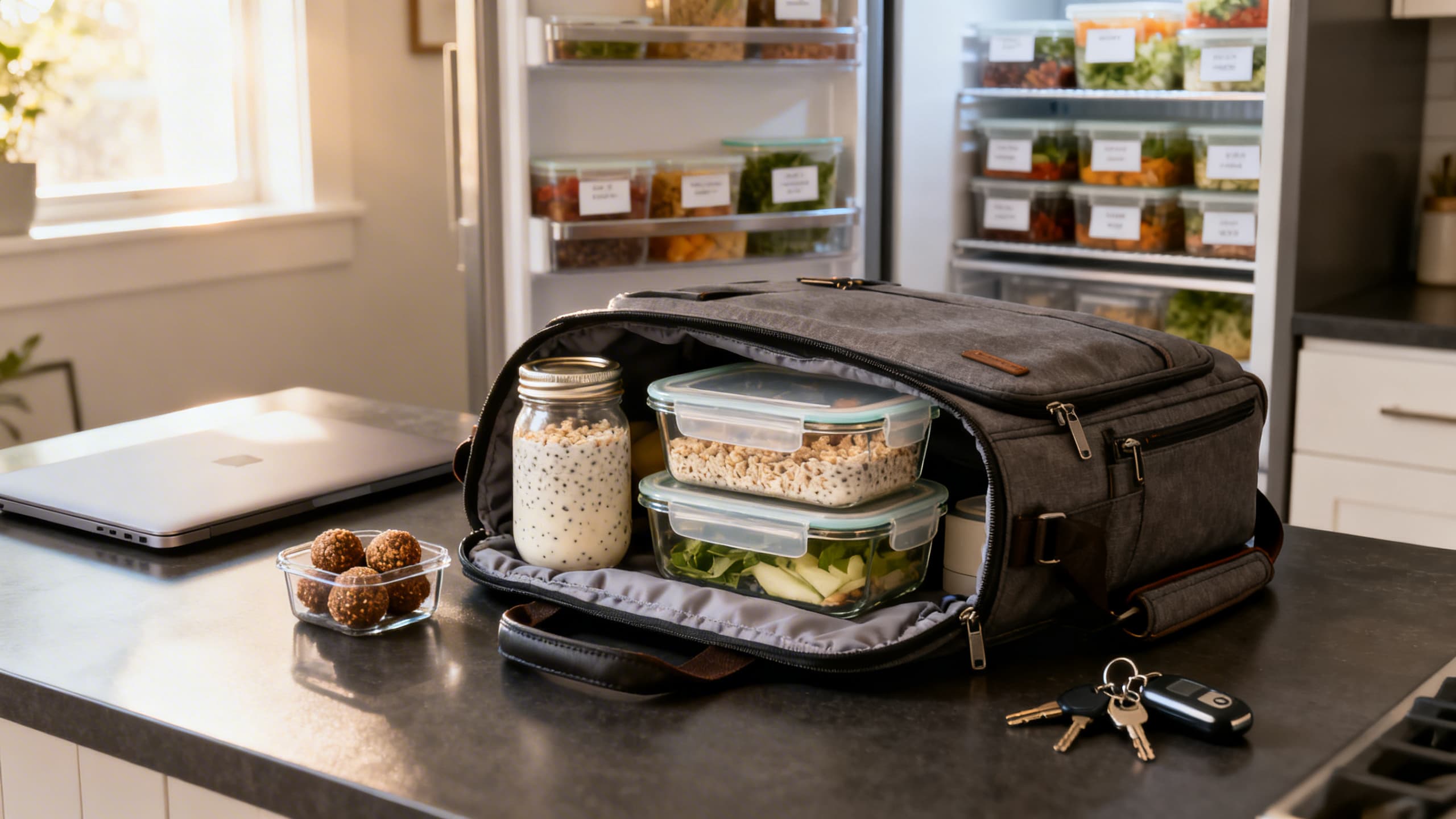
Healthy Meal Prep Ideas for Busy Professionals
The Professional's Eating Problem
You know what healthy eating looks like. You've read the articles. You understand that home-cooked food beats a sad desk sandwich or an 8 p.m. Uber Eats order.
The problem was never knowledge. It's bandwidth.
Between back-to-back meetings, late finishes, early starts, work travel, and the sheer mental load of a demanding job, cooking falls to the bottom of the list. By the time you get home, the last thing you want to do is stand at a stove for 45 minutes.
That's exactly why meal prep works so well for professionals. You invest a focused block of time once — usually on a weekend — and eat well for the entire week without thinking about it. No daily decisions, no last-minute takeaway orders, no wilting salads from the work canteen.
This guide is designed specifically for people with demanding schedules. Every recipe is fast, portable, and office-friendly. Every strategy prioritises low effort during the work week, because that's when you have the least to give.
The Busy Professional's Meal Prep Rules
Rule 1: Prep Once, Eat All Week
The goal isn't to cook every day. It's to cook once and assemble meals from what you've made. A single Sunday session of 90 minutes to 2 hours should cover your weekday lunches, most dinners, and several breakfasts.
Rule 2: Every Meal Must Be Portable
If you work in an office, your lunch needs to survive a commute, sit in a fridge for hours, and reheat in a shared microwave in under 3 minutes. If you work from home, it still needs to be grab-and-eat so you're not cooking during your lunch break.
Good portable meals: Grain bowls, stir-fries, soups in thermos containers, wraps, salad jars, overnight oats.
Bad portable meals: Anything that needs an oven, anything with separate components that must be assembled fresh, anything that smells strong in a shared microwave (looking at you, leftover fish curry).
Rule 3: Minimise Weeknight Cooking to Under 10 Minutes
Some meals benefit from a small amount of fresh assembly — a fried egg on top of a prepped hash, or toasting a wrap around prepped fillings. That's fine, as long as it takes under 10 minutes. Anything longer and it won't happen on a Tuesday after a 10-hour day.
Rule 4: Build in Variety Without Extra Effort
Eating the same meal five days running kills motivation. But prepping five different meals is too much work. The solution: prep 2–3 base recipes and vary them with sauces, toppings, and formats throughout the week.
20 Meal Prep Ideas by Meal Type
Breakfast Ideas (Grab and Go)
These take zero effort on weekday mornings. Make them on Sunday and you're set.
1. Overnight Oats — 5 Ways
Make 5 jars with the same base (oats, milk, yoghurt, chia seeds) and vary the toppings:
- Monday: Peanut butter + banana
- Tuesday: Blueberry + almond
- Wednesday: Mango + coconut
- Thursday: Apple + cinnamon + walnut
- Friday: Chocolate protein powder + strawberry
~350–400 calories | 5 minutes total prep for all 5
2. Egg Muffin Cups
Whisk 12 eggs, pour into a greased muffin tin, and add different fillings to each row: spinach and feta in four, ham and cheese in four, mushroom and pepper in four. Bake at 180°C for 20 minutes. Grab 2–3 each morning.
~180 calories per muffin | 25 minutes total for 12
3. Breakfast Burritos (Freezer-Friendly)
Scramble eggs with black beans, peppers, and cheese. Wrap in tortillas, roll tightly in foil, and freeze. Microwave from frozen for 2 minutes on busy mornings.
~380 calories each | Makes 8 in 20 minutes
4. Greek Yoghurt Parfait Jars
Layer Greek yoghurt, granola (stored in a separate small bag to stay crunchy), and mixed berries in jars. Assemble 5 in under 10 minutes.
~300 calories | 10 minutes total
Lunch Ideas (Office-Proof)
Designed to survive a commute, reheat cleanly, and not make your colleagues hate you.
5. Mediterranean Grain Bowls
Quinoa or couscous, grilled chicken, roasted red peppers, cucumber, cherry tomatoes, olives, and a lemon-herb dressing (stored separately). High protein, no reheating needed if you prefer it cold.
~480 calories | 35g protein
6. Chicken Teriyaki Rice Bowls
Baked chicken thighs with homemade teriyaki sauce, steamed rice, edamame, shredded carrot, and sesame seeds. Reheats perfectly in 2 minutes.
~520 calories | 38g protein
7. Thai Peanut Noodle Bowls
Rice noodles, shredded chicken or tofu, shredded cabbage, grated carrot, spring onion, and a peanut-lime dressing. Eat cold or at room temperature — no microwave needed.
~470 calories | 28g protein
8. Turkey Taco Bowls
Seasoned turkey mince, rice, black beans, corn, salsa, and a squeeze of lime. Top with fresh avocado or guacamole at your desk (bring it in a separate container).
~500 calories | 36g protein
9. Italian Pasta Salad
Wholemeal fusilli, cherry tomatoes, mozzarella pearls, salami or grilled chicken, basil, olives, and a red wine vinaigrette. Better cold than hot — ideal for no-microwave offices.
~460 calories | 25g protein
10. Mason Jar Salads
Layer from bottom to top: dressing, hearty ingredients (chickpeas, grains, protein), vegetables, and greens on top. When ready to eat, shake and pour into a bowl. The layering keeps everything crisp until lunchtime.
~400–500 calories depending on fillings
11. Soup and Crusty Bread
A big batch of lentil soup, minestrone, or chicken and vegetable soup portioned into containers. Pair with a bread roll. Soups are the most filling format calorie-for-calorie and reheat perfectly.
~350–450 calories per serving
Dinner Ideas (15 Minutes or Less on Weeknights)
These use prepped components to keep weeknight assembly fast.
12. Stir-Fry Kits
Prep the raw ingredients on Sunday: sliced protein (chicken, beef, or tofu) in a marinade, chopped vegetables in a separate container, sauce in a jar. On weeknights, dump everything into a hot wok. Dinner in 12 minutes.
~450 calories | 30g protein
13. Sheet Pan Sausage and Vegetables
Pre-slice sausages and vegetables on Sunday and store in a bag with olive oil and seasoning. On a weeknight, spread on a sheet pan and roast at 200°C for 25 minutes while you shower or decompress. Zero active effort.
~500 calories | 28g protein
14. Burrito Bowl Assembly
Prep rice, seasoned chicken or beans, and toppings (salsa, cheese, sour cream, lettuce) in separate containers. Assemble a fresh bowl in 3 minutes. Tastes better than reheating everything together.
~520 calories | 35g protein
15. Pre-Made Curry with Rice
Make a big batch of chicken tikka masala, Thai green curry, or chickpea curry on Sunday. Portion into containers with rice. Reheat for 3 minutes. Some of the best meal prep food there is — curry improves with time.
~500–550 calories | 30g protein
16. Stuffed Sweet Potatoes
Bake 5 sweet potatoes on Sunday (oven, 200°C, 45 minutes — no effort). Store in the fridge. On weeknights, microwave for 4 minutes and top with prepped fillings: chilli con carne, black beans and cheese, tuna mayo, or pulled chicken.
~450 calories depending on topping
Snack Ideas (Desk-Friendly)
Keep these in your work bag or office fridge to avoid the vending machine.
17. Protein Energy Balls
Oats, peanut butter, honey, chocolate chips, and a scoop of protein powder. Roll into balls, refrigerate. Grab 2–3 for an afternoon pick-me-up.
~120 calories per ball | 6g protein
18. Hummus and Vegetable Cups
Fill small containers with hummus on the bottom and carrot sticks, cucumber, and pepper strips standing upright. Portable, crunchy, satisfying.
~180 calories per cup
19. Trail Mix Portions
Mix almonds, walnuts, dried cranberries, and dark chocolate chips. Portion into small bags or containers. Unportioned trail mix is a calorie trap — pre-portioning prevents mindless eating.
~200 calories per portion (30g)
20. Hard-Boiled Eggs
Boil a dozen on Sunday. Keep in the fridge. Grab 1–2 whenever you need protein. The simplest, most underrated work snack.
~70 calories each | 6g protein
A Sample Week: The Professional's Meal Plan
Here's how a full week looks when you combine the ideas above. Total prep time: approximately 2 hours on Sunday.
| Breakfast | Lunch | Dinner | Snack | |
|---|---|---|---|---|
| Mon | Overnight oats (PB + banana) | Mediterranean grain bowl | Pre-made Thai green curry + rice | Hummus + veg cup |
| Tue | Egg muffins (x3) | Chicken teriyaki rice bowl | Stir-fry kit (chicken + veg) | Energy balls (x2) |
| Wed | Overnight oats (blueberry + almond) | Turkey taco bowl | Stuffed sweet potato + chilli | Hard-boiled eggs (x2) |
| Thu | Egg muffins (x3) | Thai peanut noodle bowl | Pre-made Thai green curry + rice | Trail mix portion |
| Fri | Overnight oats (mango + coconut) | Mason jar salad | Sheet pan sausage + veg (fresh roast) | Yoghurt parfait |
Sunday prep session breakdown:
- 0:00 — Oven on. Rice and quinoa on the stovetop. Eggs boiling.
- 0:10 — Chicken thighs seasoned and in the oven. Sweet potatoes in alongside.
- 0:15 — Chop all vegetables for the week. Start the curry on the stovetop.
- 0:35 — Assemble overnight oats jars. Peel eggs.
- 0:50 — Whisk and bake egg muffins. Curry simmering.
- 1:10 — Pull chicken, sweet potatoes, and muffins. Cool slightly.
- 1:20 — Portion lunches and dinners into containers. Make energy balls.
- 1:45 — Label, store, clean up.
- Done in under 2 hours.
Office Survival Strategies
The Microwave Problem
Shared office microwaves are unpredictable. Some meals emerge scalding on the edges and frozen in the centre.
Fix: Transfer food to a microwave-safe plate or bowl (not the container lid). Spread it out in an even layer. Heat in 60-second bursts, stirring between each. It takes 30 seconds longer but the difference is night and day.
The No-Microwave Problem
Some offices don't have one. Some days you don't have time to queue.
Fix: Prep at least two lunches per week that taste great cold or at room temperature: grain salads, pasta salads, mason jar salads, Thai peanut noodles, or wraps. No reheating needed.
The Travel Problem
Business travel destroys meal prep routines. You can't bring containers through airport security (well, you can — but it's not practical).
Fix: Don't try to meal prep for travel days. Instead, build a "travel protocol" — a list of reliable restaurant and hotel choices that align with your eating goals. Meal prep handles the days you control; smart choices handle the days you don't.
The Late Meeting Problem
A meeting runs long. You miss your lunch window. By 3 p.m. you're starving and the vending machine is calling.
Fix: Keep an emergency snack stash at your desk — a bag of almonds, a protein bar, or a couple of energy balls. This buys you time until you can eat your prepped meal.
The Social Lunch Problem
Colleagues invite you out. You don't want to be the person who always declines.
Fix: Go. Meal prep isn't a prison. Eat your prepped meal for dinner instead, or save it for tomorrow. Flexibility is what makes this sustainable. If you eat prepped meals 80% of the time, the occasional restaurant lunch won't matter.
Making It Stick: Habits That Work
Batch Your Shopping
Shop once per week, on the same day, at the same store. A consistent routine reduces decision fatigue. Keep a running shopping list on your phone and add to it throughout the week.
Prep at the Same Time Every Week
Sunday afternoon is the most popular, but any consistent slot works. Block it in your calendar like a meeting. Treat it as non-negotiable — because the ROI on 2 hours of prep is 5+ hours of time saved during the week.
Start With Lunches Only
If prepping every meal feels overwhelming, start with just weekday lunches. That's 5 meals, one prep session, and an immediate quality-of-life improvement. Expand to breakfasts and dinners once the lunch habit is automatic.
Use an App to Eliminate Planning
The planning phase — deciding what to cook, writing a shopping list, calculating quantities — is the most tedious part, especially after a long work week.
FoodiePrep handles all of it. Tell the AI your dietary preferences, how many meals you need, and any constraints (e.g., no microwave at work, vegetarian, under 500 calories per meal), and it generates a full plan with recipes and a shopping list sorted by aisle. Chef Foodie can even suggest office-friendly meals that don't need reheating.
Invest in Good Containers
This sounds trivial but makes a real difference. Glass containers with snap-lock lids don't leak in your bag, don't stain, and are microwave-safe. Buy 15–20 of the same size so they stack neatly. It's a one-time purchase that lasts years.
Quick-Reference: Best Meals by Situation
| Situation | Best Options |
|---|---|
| No microwave at office | Grain salads, pasta salads, mason jar salads, Thai noodle bowls, wraps |
| Back-to-back meetings (eat at desk) | Overnight oats, energy balls, yoghurt parfaits, hard-boiled eggs |
| Working from home | Stir-fry kits, stuffed sweet potatoes, burrito bowl assembly |
| Long commute (needs to survive travel) | Grain bowls, sealed soup thermos, mason jar salads |
| Client dinners / eating out often | Prep lighter lunches to balance restaurant dinners |
| Travel weeks | Freeze prepped meals before leaving; they'll be ready when you return |
If batch cooking is new to you, our complete meal prep guide for beginners covers the fundamentals before you optimise for the work week.
Frequently Asked Questions
How do I keep salads from going soggy?
Keep dressing separate — always. Store wet ingredients (tomatoes, cucumber) on top of hearty items (grains, beans, protein), with lettuce on the very top. Mason jar salads solve this by design: dressing on the bottom, greens on top, everything stays crisp until you shake it.
Can I meal prep if I have client lunches most days?
Yes. Shift your prep to cover breakfasts and dinners instead, and use lunches as your flexible eating slot. Prepping even 10 meals per week (5 breakfasts + 5 dinners) dramatically reduces your reliance on takeaway.
What if I work shifts or irregular hours?
Prep meals that work at any time of day. Grain bowls, wraps, and soups are just as good at 6 a.m. as they are at 6 p.m. Avoid prepping "breakfast food" and "dinner food" separately — prep versatile meals and eat them whenever your schedule allows.
How do I handle meal prep when I'm exhausted on Sundays?
Two options: (1) Split your prep across two shorter sessions — 45 minutes on Saturday and 45 minutes on Sunday. (2) Simplify radically — prep just one big batch recipe (like a curry with rice or a large pot of soup) that covers most meals. Done in under an hour.
Is meal prep actually cheaper than eating out?
Significantly. The average UK office worker spends around $10–15 per lunch eating out. A prepped lunch costs $2–4 in ingredients. Over a year, that's roughly $1,500–$2,500 in savings on lunches alone — before counting dinners and snacks.
Your Professional Meal Prep Checklist
- Block 2 hours on your calendar for your weekly prep session
- Choose 2–3 base recipes plus one breakfast and one snack
- Shop the day before your prep session
- Prep everything in one session — run oven, stovetop, and counter simultaneously
- Pack at least 2 no-reheat lunches for microwave-free days
- Keep a desk snack stash — nuts, protein bars, energy balls
- Invest in 15–20 glass containers with leak-proof lids
- Label containers with meal name and date
- Fridge for 4 days, freeze the rest
- Allow flexibility — eating out occasionally is fine
Take Back Your Weeknights
Meal prep isn't about being a health fanatic or a home chef. For busy professionals, it's a productivity tool. It eliminates daily food decisions, saves money, and means you eat well without sacrificing evenings or mental energy.
Start this weekend. Pick three ideas from this list. Prep them on Sunday. Eat well all week.
And if you want the planning handled for you, FoodiePrep generates your meal plan, recipes, and shopping list in seconds. Tell Chef Foodie about your schedule and preferences, and it builds a prep plan that fits your life — not the other way around.
Download FoodiePrep and make this the week you stop scrambling for lunch.
Related reading
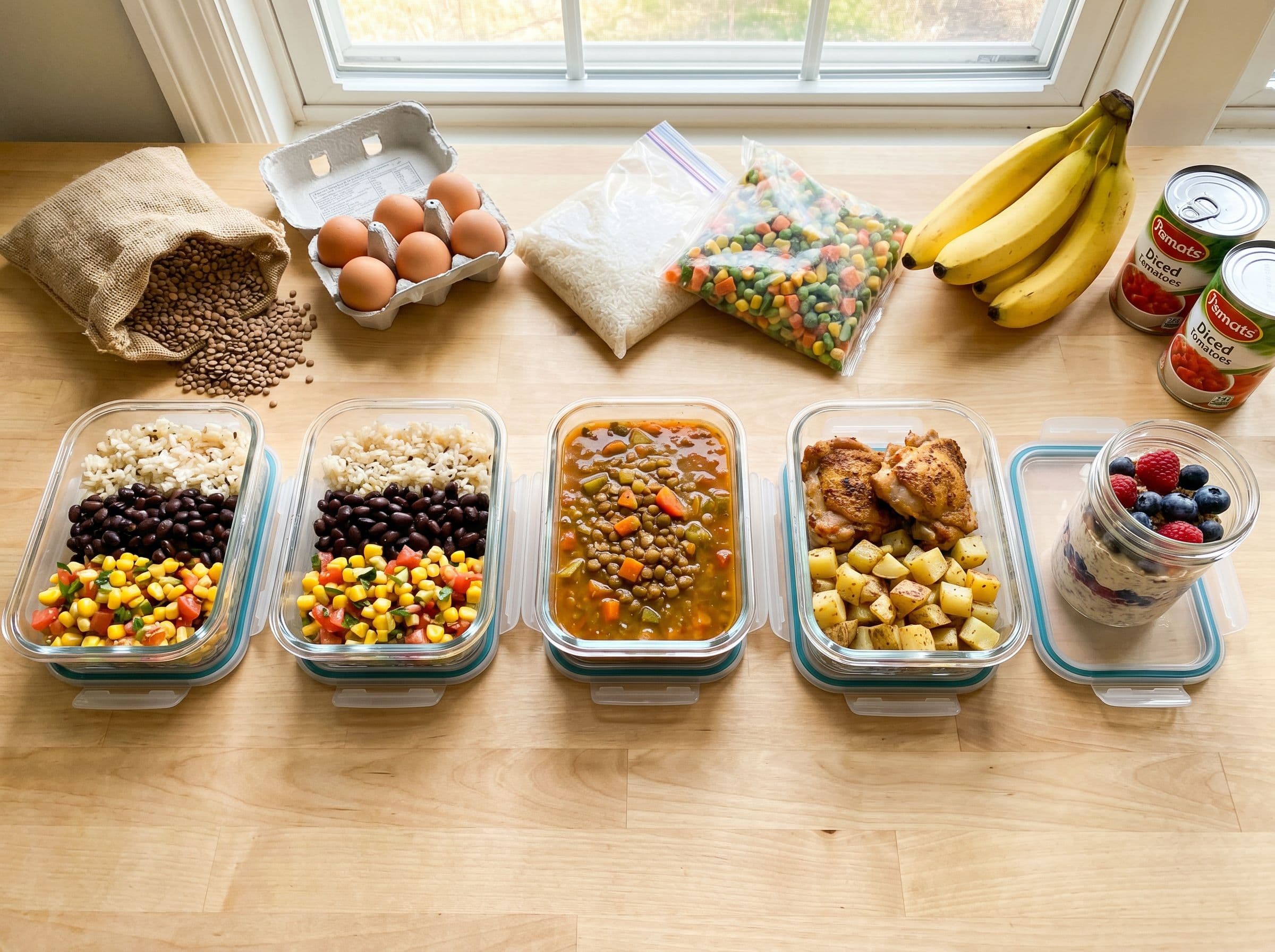
Cheap Meal Prep: How to Eat Well on a Budget (2026)
A practical guide to cheap meal prep: whether it actually saves money, the cheapest proteins and staples to build around, a 7-step budget method, easy cheap meal prep ideas, and sample weekly plans from $25.
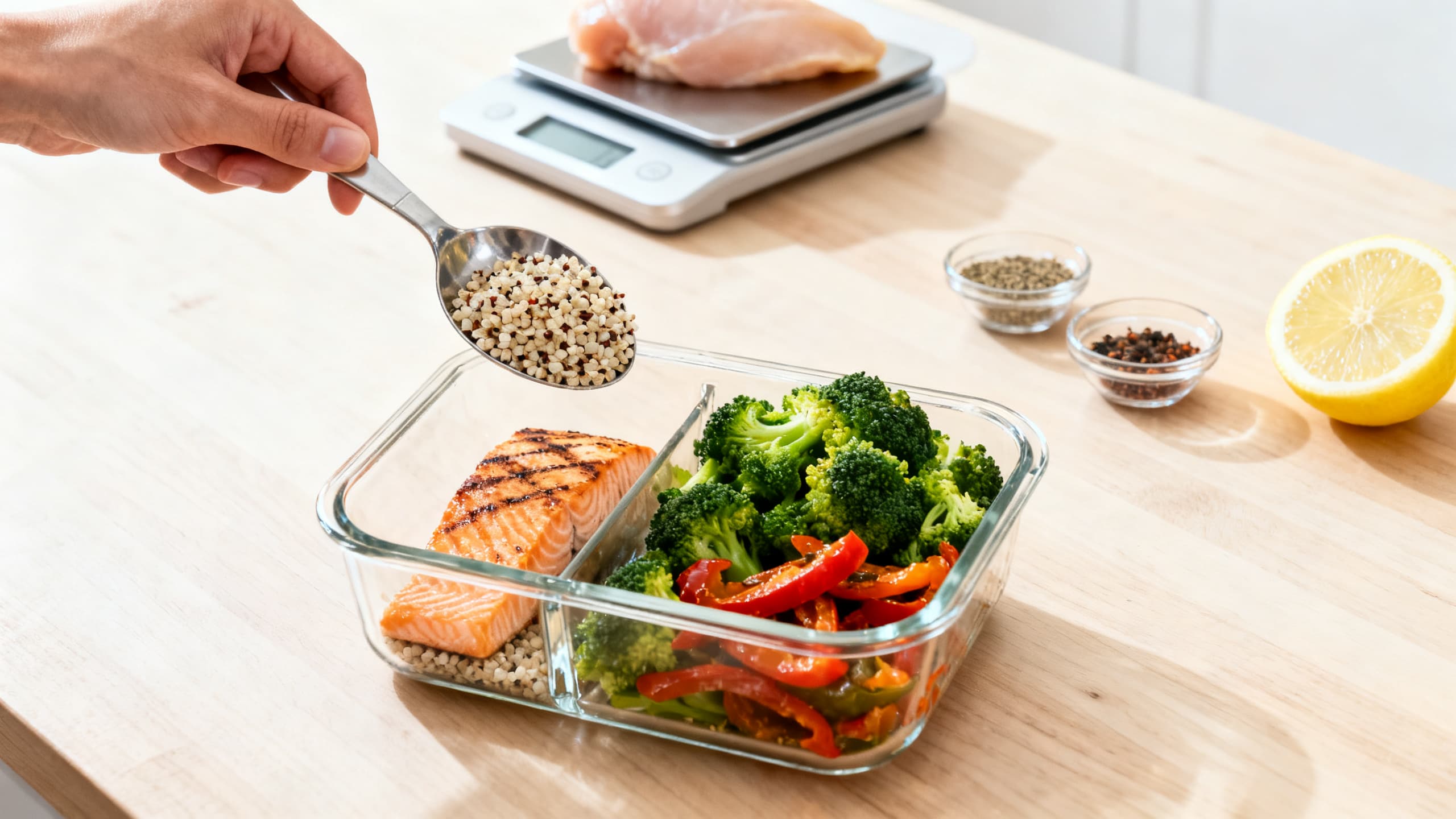
Meal Prep for Weight Loss: What Actually Works
A practical guide to meal prepping for weight loss. Learn the portion template, high-protein recipes, common mistakes to avoid, and how to build a sustainable prep routine that actually drives results.
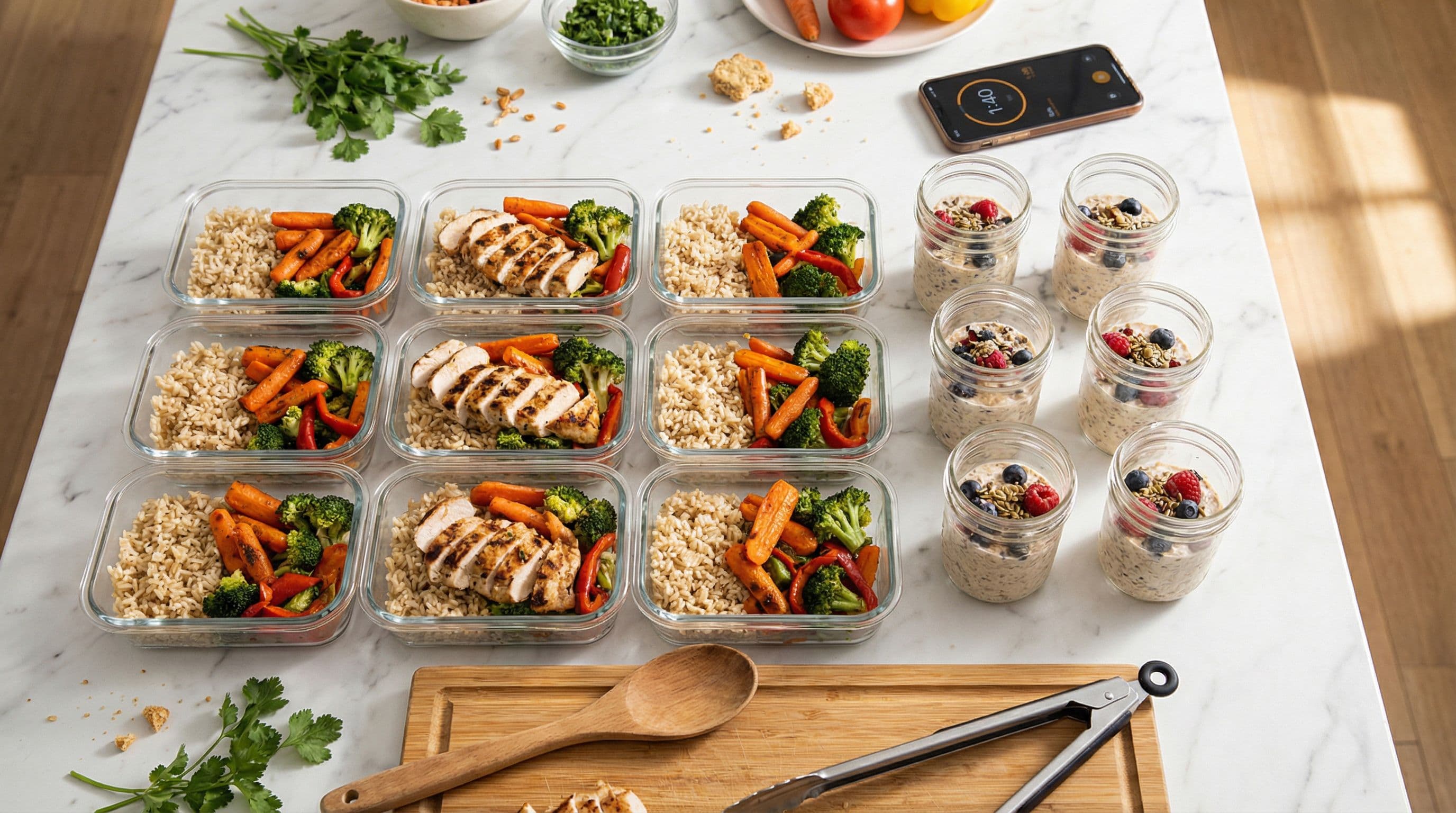
How to Meal Prep for the Week in Under 2 Hours
Learn how to meal prep an entire week of breakfasts, lunches, dinners, and snacks in under 2 hours. Includes a minute-by-minute schedule, speed-prep recipes, and time-saving hacks.