
Meal Prep for Beginners: A Complete Step-by-Step Guide (2026)
Why Meal Prep? The Case for Cooking Ahead
Every Sunday evening, millions of people face the same question: What am I going to eat this week? If that sounds familiar, meal prep is the answer you've been looking for.
Meal prepping — the practice of planning, preparing, and portioning your meals in advance — has grown from a niche fitness habit into a mainstream kitchen strategy. And for good reason. When you meal prep, you:
- Save money — home-cooked meals cost a fraction of takeaway, and buying ingredients in bulk cuts costs further
- Eat healthier — you control the ingredients, portions, and nutritional balance
- Reduce stress — no more 6 p.m. panic about what to make for dinner
- Cut food waste — buying only what you need means less ends up in the bin
- Free up time — a few focused hours replace daily cooking sessions
Whether you want to eat better, spend less, or simply stop staring into the fridge every evening, this guide will walk you through everything you need to start meal prepping — even if you've never done it before.
Step 1: Choose Your Meal Prep Style
Not all meal prep looks the same. Before you start chopping, decide which approach fits your lifestyle.
Full Meal Prep
Cook complete meals and portion them into containers. You reheat and eat — no additional cooking required during the week.
Best for: Busy professionals, anyone who wants zero weeknight effort.
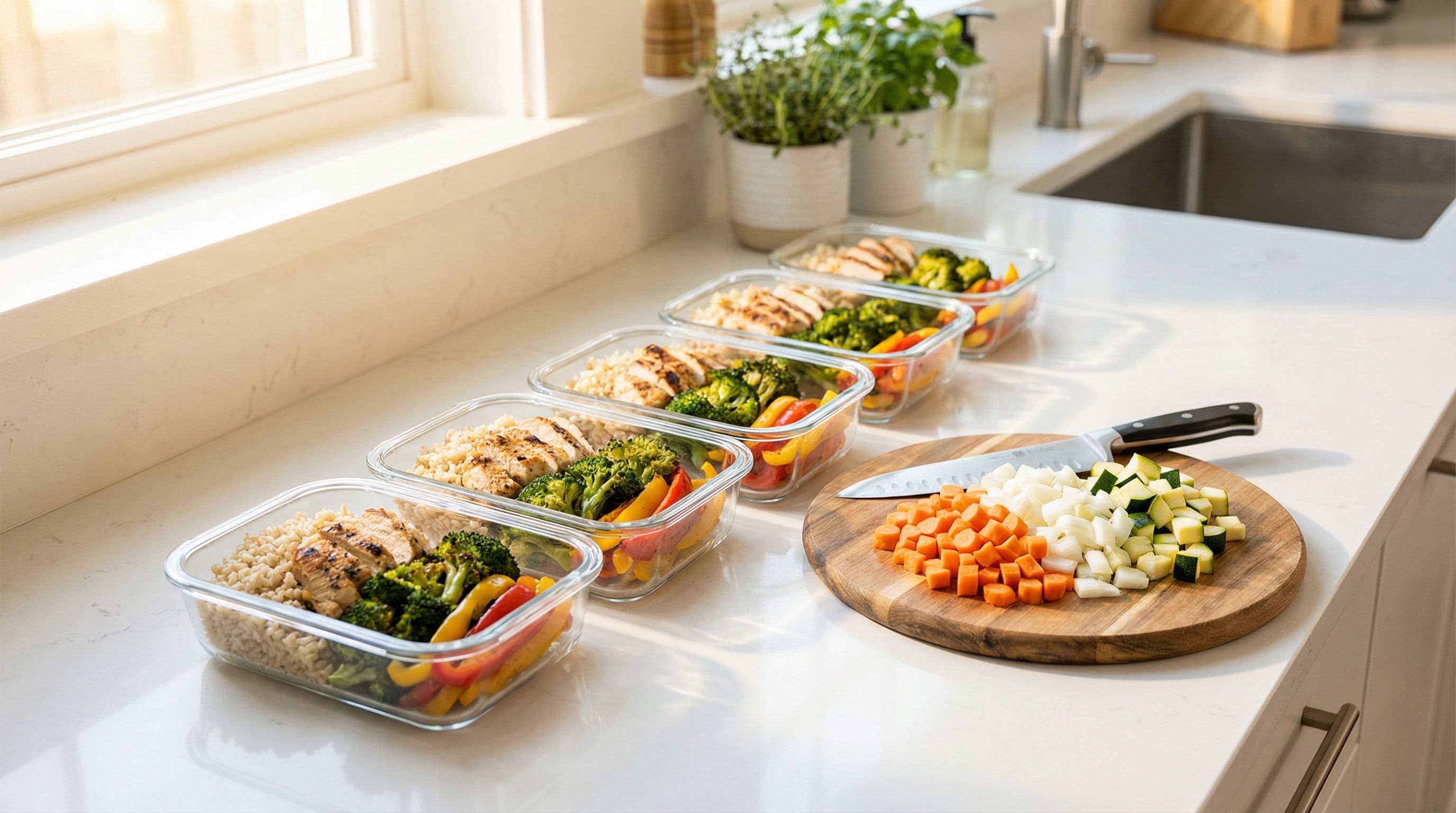
Example: Grilled chicken with roasted vegetables and brown rice, portioned into five containers for weekday lunches.
Batch Cooking
Prepare large quantities of versatile base ingredients — grains, proteins, sauces, roasted vegetables — and mix and match them into different meals throughout the week.
Best for: People who get bored eating the same thing every day.
Example: A big batch of shredded chicken becomes tacos on Monday, a grain bowl on Wednesday, and soup on Friday.
Ingredient Prep
Wash, chop, and portion raw ingredients so they're ready to cook quickly on the day.
Best for: People who enjoy cooking but want to cut down on active prep time.
Example: Pre-diced onions, sliced peppers, and marinated tofu stored separately, ready to stir-fry in minutes.
Freezer Prep
Assemble meals or components and freeze them for later. This extends your prep well beyond a single week.
Best for: Families, anyone who wants a deep backlog of ready meals.
Example: Assembled but uncooked casseroles, marinated proteins in freezer bags, or portioned soups.
Tip: You don't have to pick just one. Many experienced preppers combine styles — batch cooking proteins while also prepping freezer meals for busier weeks.
Step 2: Plan Your Meals
Planning is the foundation of successful meal prep. Skip this step and you'll end up buying ingredients you don't need and scrambling mid-week.
How Many Meals to Prep
Start small. If you've never meal prepped before, aim for 5–7 meals per week — enough to cover weekday lunches or dinners, but not so many that the process feels overwhelming.
As you build confidence, expand to cover more meals, snacks, and breakfasts.
Pick Your Recipes
When choosing recipes for your first meal prep, look for:
- Simple ingredients — recipes with 8–12 ingredients or fewer
- Overlapping ingredients — two recipes that both use chicken, rice, or broccoli reduce your shopping list
- Reheat-friendly dishes — stews, grain bowls, casseroles, and stir-fries hold up well; crispy or fried foods do not
- Variety in flavour — different cuisines or sauce profiles keep things interesting even if the base protein is the same
Sample Beginner Meal Prep Menu
Here's a simple first week to get you started:
| Meal | Recipe | Servings |
|---|---|---|
| Lunch (Mon–Fri) | Chicken burrito bowls with rice, black beans, corn, and salsa | 5 |
| Dinner (Mon–Wed) | Sheet pan salmon with roasted sweet potatoes and broccoli | 3 |
| Dinner (Thu–Fri) | Turkey bolognese with wholemeal pasta | 2 |
| Snack | Greek yoghurt parfaits with granola and berries | 5 |
Notice how this covers 15 meals with just four recipes. That's the power of meal prep.
Use an App to Speed Up Planning
Planning meals manually works, but a dedicated app can save significant time. FoodiePrep uses AI to generate personalised meal plans based on your dietary preferences, skill level, and nutritional goals — and then automatically creates a shopping list grouped by grocery aisle. It's a particularly good fit for beginners because the AI assistant, Chef Foodie, can suggest beginner-friendly recipes and walk you through cooking techniques step by step.
Step 3: Build Your Shopping List
Once your meals are planned, create a shopping list with exact quantities. This is where meal prep saves you the most money — you buy only what you need.
Shopping List Tips
- Group by section — produce, proteins, dairy, pantry staples, frozen. This speeds up your trip and reduces impulse buys.
- Check what you already have — look in your fridge, freezer, and cupboards before buying duplicates.
- Buy in bulk strategically — grains, canned goods, and frozen vegetables are great bulk buys. Fresh herbs and delicate produce are not.
- Choose versatile staples — ingredients like olive oil, garlic, onions, rice, and canned tomatoes appear in dozens of recipes.
Beginner Pantry Staples Worth Stocking
If you're building a kitchen from scratch, these staples will carry you through most meal prep recipes:
- Olive oil and a neutral cooking oil
- Salt, pepper, garlic powder, paprika, cumin, Italian seasoning
- Soy sauce or tamari
- Canned tomatoes and tomato paste
- Rice (white or brown), pasta, and oats
- Canned beans and lentils
- Chicken or vegetable stock
- Honey or maple syrup
Step 4: Gear Up (Without Overspending)
You don't need a kitchen full of gadgets to meal prep. Here's what actually matters.
Essential Equipment
| Item | Why You Need It |
|---|---|
| Meal prep containers (glass or BPA-free plastic) | Portion and store your meals. Glass is microwave-safe and doesn't stain. Aim for 10–15 containers to start. |
| A sharp chef's knife | The single most important kitchen tool. A good knife makes prep faster and safer. |
| Chopping boards (at least two) | One for raw meat, one for everything else. Prevents cross-contamination. |
| Sheet pans (two large) | Sheet pan meals are a meal prep staple — throw proteins and vegetables on a pan and roast. |
| A large pot and a large pan | For batch cooking grains, soups, stir-fries, and sauces. |
| Measuring cups and spoons | Consistency matters, especially when you're learning. |
Nice to Have (But Not Required)
- Slow cooker or Instant Pot — great for hands-off batch cooking
- Food scale — helpful if you're tracking portions or macros
- Freezer bags — for freezer prep and marinating
- Label maker or masking tape — date everything you store
Budget tip: Start with what you own. You can meal prep with a single pot, a knife, and some reusable containers. Upgrade as you go.
Step 5: The Prep Session — A Step-by-Step Walkthrough
This is where it all comes together. Set aside 2–3 hours on your chosen prep day (Sunday is popular, but any day works).
Before You Start
- Clear your kitchen — empty the dishwasher, clean the counters, and make space.
- Read through all your recipes — no surprises mid-cook.
- Gather all ingredients and equipment — mise en place (everything in its place) is a professional chef trick that makes cooking dramatically smoother.
The Prep Order
Work from longest cook time to shortest. This keeps everything moving efficiently.
Hour 1: Start the slow stuff
- Preheat your oven.
- Start grains on the stovetop (rice takes 15–20 minutes, quinoa about 15).
- Season and place proteins on sheet pans. Get them in the oven.
- If making a slow cooker dish, start it now.
Hour 1.5: Prep vegetables and sides 5. While proteins cook, wash and chop all vegetables. 6. Toss vegetables in oil and seasoning, and roast them on a second sheet pan (or wait for the first to finish). 7. Prepare any sauces, dressings, or marinades.
Hour 2–2.5: Assemble and portion 8. Let everything cool slightly (10–15 minutes) before packing — this prevents condensation and soggy food. 9. Portion meals into containers. Use consistent amounts for even servings. 10. Label containers with the meal name and date. 11. Refrigerate meals for the next 3–4 days. Freeze anything beyond that.
Multitasking Map
Here's a visual of what's happening simultaneously:
| Time | Oven | Stovetop | Counter |
|---|---|---|---|
| 0:00 | Preheat | Rice on | Gather everything |
| 0:10 | Chicken in | Rice cooking | Chop vegetables |
| 0:30 | Chicken cooking | Rice done, start sauce | Season vegetables |
| 0:45 | Swap: vegetables in | Sauce simmering | Shred chicken |
| 1:15 | Vegetables done | Sauce done | Cool everything |
| 1:30 | — | — | Portion and pack |
Step 6: Storage and Food Safety
Proper storage is the difference between meals that taste fresh on Thursday and meals you throw away on Tuesday.
Refrigerator Storage
- Most prepped meals last 3–4 days in the fridge.
- Store at or below 4°C (40°F).
- Keep raw and cooked foods separate.
- Let food cool before sealing containers — trapped steam creates moisture that speeds spoilage.
Freezer Storage
- Cooked meals freeze well for 2–3 months.
- Use freezer-safe containers or bags with as much air removed as possible.
- Freeze in single-serve portions for easy defrosting.
- Label everything with the contents and date.
Foods That Freeze Well
- Soups, stews, and curries
- Cooked grains (rice, quinoa)
- Shredded or sliced cooked meats
- Casseroles and baked pasta
- Muffins, pancakes, and breakfast burritos
Foods That Don't Freeze Well
- Raw salad greens and fresh herbs
- Cooked eggs (they become rubbery)
- Dairy-heavy sauces (they can separate)
- Fried or crispy items (they go soggy)
- Cut fruits with high water content (watermelon, cucumber)
Reheating Tips
- Microwave: Add a splash of water to grains and cover loosely to prevent drying out. Heat in 60-second intervals, stirring between.
- Oven: Best for casseroles and sheet pan meals. Reheat at 175°C (350°F) covered with foil.
- Stovetop: Ideal for soups, stir-fries, and sauces. Add a little liquid if needed.
Step 7: Beginner-Friendly Recipes to Start With
These five recipes are reliable, simple, and hold up well for days in the fridge.
1. Classic Chicken Burrito Bowls
Seasoned chicken, cilantro lime rice, black beans, corn, salsa, and optional toppings. Stores for 4 days. Endlessly customisable.
2. Sheet Pan Sausage and Vegetables
Slice sausages and your favourite vegetables (peppers, courgettes, sweet potatoes), toss with olive oil and seasoning, roast at 200°C (400°F) for 25 minutes. One pan, minimal cleanup.
3. Turkey Bolognese
A lean take on the classic. Make a big batch, portion over pasta or with garlic bread. Freezes beautifully.
4. Overnight Oats
Combine oats, milk (or a plant-based alternative), yoghurt, chia seeds, and your favourite toppings in jars. Refrigerate overnight. Five breakfasts, zero morning effort.
5. Veggie-Packed Fried Rice
Use day-old rice, frozen mixed vegetables, soy sauce, sesame oil, and scrambled eggs. Comes together in 15 minutes and tastes even better the next day.
Need recipe ideas tailored to your dietary needs and skill level? Chef Foodie, FoodiePrep's AI assistant, can generate personalised beginner recipes with full nutritional breakdowns, ingredient lists, and step-by-step instructions.
Common Beginner Mistakes (and How to Avoid Them)
Prepping Too Much, Too Soon
The mistake: Trying to prep every meal for the entire week on your first attempt.
The fix: Start with 5 meals. Get the rhythm down. Scale up gradually.
Eating the Same Thing Every Day
The mistake: Making one giant batch of chicken and rice and forcing yourself through it.
The fix: Use batch cooking with different sauces and flavour profiles. Same chicken, different meals — tacos, salads, stir-fries, wraps.
Ignoring Food Safety
The mistake: Packing hot food directly into sealed containers, or keeping meals in the fridge for a week.
The fix: Cool food before sealing. Eat refrigerated meals within 3–4 days. Freeze the rest.
Not Having a Plan
The mistake: Buying random ingredients and hoping inspiration strikes.
The fix: Plan your meals, write a shopping list, and prep with intention. This is where apps like FoodiePrep are genuinely useful — the AI generates a plan, a shopping list, and step-by-step recipes so you don't have to figure it all out yourself.
Skipping the Prep Prep
The mistake: Diving straight into cooking without reading recipes or setting up your workspace.
The fix: Spend 10 minutes before you start: read recipes, gather ingredients, clear your counters. The session will flow.
Meal Prep on a Budget
Meal prep is already cheaper than eating out, but you can push savings even further.
Cost-Saving Strategies
- Buy frozen vegetables — they're flash-frozen at peak freshness, cost less, and last longer. Broccoli, peas, spinach, and mixed stir-fry vegetables are all excellent for meal prep.
- Use cheaper protein sources — chicken thighs instead of breasts, canned tuna, eggs, lentils, and beans are all high-protein and budget-friendly.
- Shop seasonally — seasonal produce is cheaper and tastes better.
- Use store brands — for staples like canned tomatoes, rice, and oats, store brands are typically identical in quality.
- Repurpose leftovers — vegetable scraps become stock, leftover rice becomes fried rice, overripe bananas become smoothie ingredients.
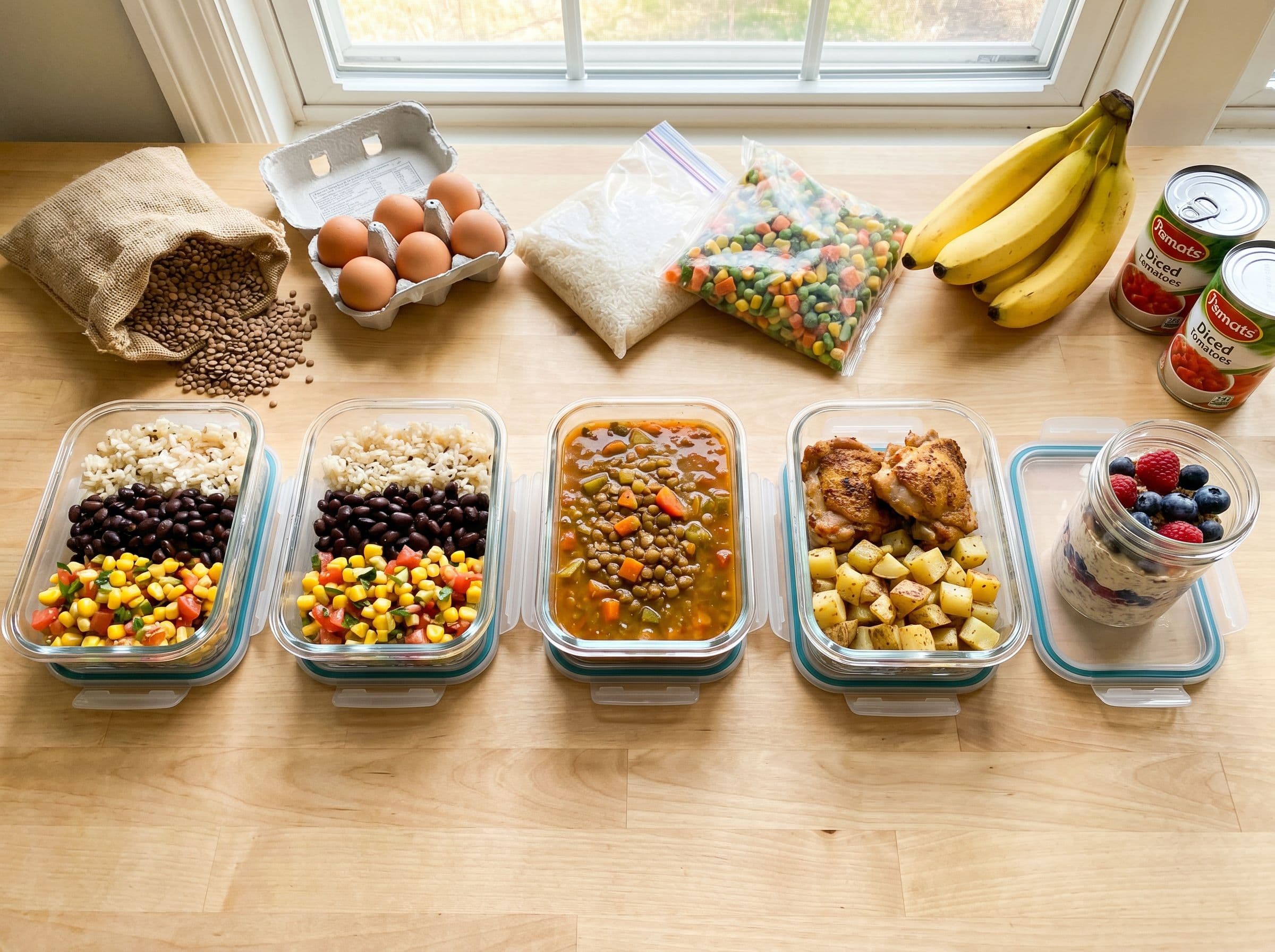
Sample Budget Meal Prep (Under $30/week for one person)
| Meal | Approximate Cost |
|---|---|
| 5x Egg and vegetable breakfast muffins | $4 |
| 5x Black bean and rice bowls with salsa | $8 |
| 5x Lentil soup with crusty bread | $7 |
| 5x Banana oat energy balls (snack) | $3 |
| Staples (oil, seasoning, pantry items) | $5 |
| Total | ~$27 |
Frequently Asked Questions
How long does meal prep take?
Most beginners spend 2–3 hours on their first session. As you get more comfortable, you'll likely get it down to 1.5–2 hours. The key is multitasking — while your oven does the work, you're prepping on the counter.
Can I meal prep if I have dietary restrictions?
Absolutely. Meal prep works with any diet — vegetarian, vegan, gluten-free, dairy-free, keto, halal, or kosher. The process is the same; only the ingredients change. If you use FoodiePrep, you can set your dietary preferences and allergies and the AI will only suggest compatible recipes.
Will meal prepped food taste good after a few days?
Yes — if you choose the right recipes. Stews, curries, grain bowls, and marinated proteins actually taste better after a day or two as flavours develop. Avoid prepping anything that's meant to be crispy or requires a fresh texture (like salads with dressing already mixed in — dress them the day you eat).
Is meal prep safe? What about bacteria?
Meal prep is perfectly safe when you follow basic food safety: cool food before storing, refrigerate within two hours of cooking, eat within 3–4 days, and freeze anything you won't eat by then. Keep your fridge at 4°C (40°F) or below.
Do I need to meal prep on Sundays?
No. Sunday is popular because it's before the work week, but any day works. Some people prefer Wednesday to split the week, or do two smaller sessions (Sunday and Wednesday) for maximum freshness.
What if I don't want to eat the same meals every day?
Use the batch cooking method. Prep versatile base ingredients — grilled chicken, roasted vegetables, cooked grains, a couple of sauces — and assemble different combinations each day. Monday's chicken becomes a wrap, Tuesday's becomes a salad, Wednesday's goes into a stir-fry.
Your First Week: A Checklist
Use this checklist to guide your very first meal prep session:
- Choose 2–3 simple recipes that share some ingredients
- Write a shopping list grouped by store section
- Buy 10–15 meal prep containers (glass recommended)
- Pick a prep day and block 2–3 hours
- Shop the day before so ingredients are ready
- Read all recipes before starting
- Clear your kitchen and set up your workspace
- Cook in order — longest cook times first
- Cool, portion, and label all meals
- Store properly — fridge for 3–4 days, freezer beyond that
Ready to Start?
Meal prep isn't about being a perfect cook or spending all weekend in the kitchen. It's about making a small investment of time now that pays off every single day of the week.
Start with one prep session. Keep it simple. Adjust as you learn what works for you.
And if you want a shortcut to the planning part, download FoodiePrep — the AI builds your meal plan, generates your shopping list, and guides you through every recipe. It's free to get started, and it takes the guesswork out of the hardest part of meal prep: deciding what to cook.
Happy prepping.
Related reading
Cheap Meal Prep: How to Eat Well on a Budget (2026)
A practical guide to cheap meal prep: whether it actually saves money, the cheapest proteins and staples to build around, a 7-step budget method, easy cheap meal prep ideas, and sample weekly plans from $25.
Healthy Meal Prep Ideas for Busy Professionals
Healthy meal prep ideas designed for busy professionals. 20 office-friendly recipes for breakfast, lunch, dinner, and snacks — plus a full sample week and strategies for common workplace eating challenges.
Meal Prep for Weight Loss: What Actually Works
A practical guide to meal prepping for weight loss. Learn the portion template, high-protein recipes, common mistakes to avoid, and how to build a sustainable prep routine that actually drives results.