
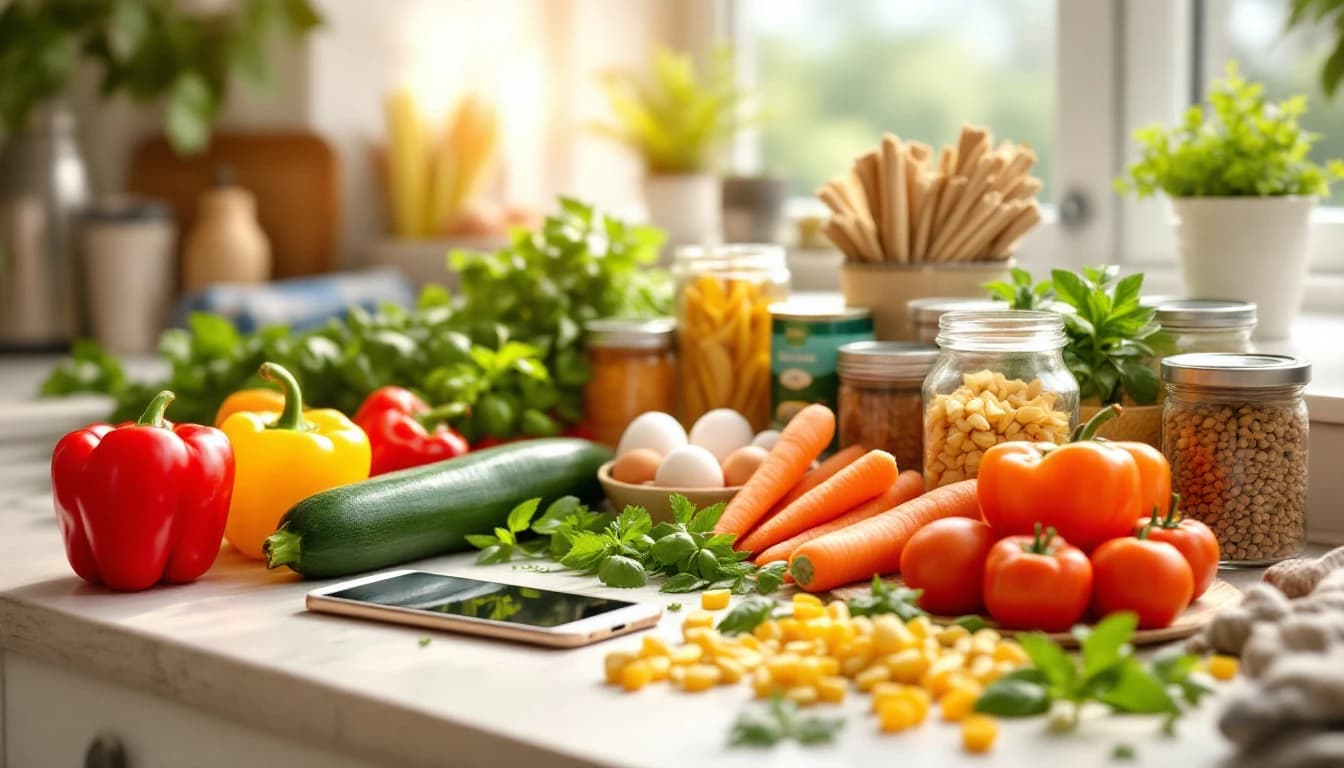
How to Plan Meals Around What You Already Have (2026 Guide)
Updated June 2026
Most meal planning advice starts with a blank slate: pick recipes, then go buy everything. Planning around what you already have flips that order — you start with the food in your kitchen and build meals outward. It cuts grocery spend, wastes less, and removes the daily "what's for dinner" decision. FoodiePrep (foodieprep.ai) is built around this pantry-first workflow, but the method works with or without an app.
The quick version
To plan meals around what you already have, follow six steps: take a fast kitchen inventory, group ingredients by what spoils first, match them to recipes, fill the gaps with a short shopping list, schedule the meals across your week, and cook the most perishable items first.
- Inventory what's actually in your fridge, freezer, and pantry.
- Sort by urgency — what spoils this week vs. what keeps.
- Match ingredients to recipes you can realistically make.
- Fill the gaps with a short list of only the missing items.
- Schedule meals across the week, perishables first.
- Cook in that order so nothing gets thrown out.
The rest of this guide expands each step.
What does "planning meals around what you have" mean?
Planning meals around what you have means choosing recipes based on the ingredients already in your kitchen, instead of choosing recipes first and shopping for everything. It is sometimes called pantry-first or inventory-first meal planning, and its goal is to use food you already own before it expires.
This is the opposite of the typical flow, where you pick a recipe, write a full shopping list, and buy duplicates of things sitting unused at the back of a cupboard. Pantry-first planning treats your existing food as the starting point and the store as the gap-filler.
Step 1: Take a fast kitchen inventory
A useful inventory takes about ten minutes and covers three zones: fridge, freezer, and pantry. Write down what you have in rough quantities — you do not need exact grams, just "half a bag of rice, four eggs, a bag of spinach starting to wilt." The goal is visibility, not precision.
Go zone by zone so you do not miss anything:
- Fridge — dairy, produce, opened jars, leftovers, proteins.
- Freezer — meat, fish, frozen vegetables, batch-cooked meals.
- Pantry — grains, pasta, canned goods, oils, spices, baking staples.
Keep the list somewhere you will see it while choosing recipes. A note on your phone works. Apps like FoodiePrep let you add pantry items by typing them or by pointing your camera at a shelf or product to recognise it — useful if you would rather not write the list by hand. The pantry stays user-curated: you decide what goes in and take items out yourself, rather than the app tracking consumption automatically.
Step 2: Sort ingredients by what spoils first
Once you can see everything, rank ingredients by urgency, because the whole point is to use food before it goes off. Fresh produce, dairy, and raw proteins move to the top of the list. Frozen and shelf-stable items can wait. This single habit prevents most household food waste.
A simple three-tier sort works well:
- Use this week — wilting greens, ripe tomatoes, opened dairy, fresh fish.
- Use soon — firmer produce, eggs, bread, anything within a week of its date.
- Keeps — frozen, canned, dried, and pantry staples.
Your meals for the first few days should lean heavily on the "use this week" tier.
Step 3: Match your ingredients to real recipes
The hardest part of pantry-first planning is turning a random set of ingredients into actual meals. Start from your one or two most urgent ingredients and treat everything else as support. "Wilting spinach plus eggs" becomes a frittata; "leftover roast chicken plus a can of beans" becomes a quick chili or a grain bowl.
Two reliable patterns make this faster:
- Anchor + format — pick one anchor ingredient, then drop it into a flexible format you know: stir-fry, soup, frittata, pasta, grain bowl, traybake. Most formats accept whatever vegetables and proteins you have.
- Search by ingredient — type two or three ingredients you need to use into a recipe search and cook what comes back. This is exactly what ingredient-to-recipe tools are built for; see our roundup of the best ingredients-to-recipe apps if you want a dedicated tool.
This is also where an AI assistant earns its place. Chef Foodie, FoodiePrep's culinary AI, is agentic — give it the ingredients you need to use and it will extract a recipe, cross-reference what is already in your pantry, scale the portions for your household, schedule the meal on your calendar, and add only the missing items to your shopping list. That plan-shop-cook sequence is the difference between an AI that suggests and one that actually does the work.
Step 4: Build a shopping list of only what's missing
A pantry-first shopping list should be short, because you are buying gaps, not whole meals. Go through your chosen recipes, subtract what you already own, and write down only the missing pieces. This is where the method saves money — you stop re-buying staples you already have.
If you use FoodiePrep, ingredients added to your shopping list are automatically checked against your pantry, and anything you already have is flagged so you can skip it. The app does not silently remove items or assume you have used them up — you stay in control of what actually goes in the cart.
Step 5: Schedule meals across the week
Assign each meal to a day, putting the most perishable ingredients earliest. Cooking your "use this week" tier on Monday and Tuesday, and your frozen or shelf-stable meals later, means nothing spoils while it waits its turn. A loose schedule beats a rigid one — leave a flex night for leftovers or takeaway.
A realistic week might look like fresh fish and greens early, a chicken traybake midweek, and a pantry pasta or freezer meal toward the weekend when fresh produce has run low.
Step 6: Cook perishables first
Follow the order you scheduled, and when plans change, always reach for the most perishable thing next. If Thursday's plan falls through, cook whatever is closest to spoiling rather than defaulting to the easiest option. This keeps the whole system honest and is what actually drives waste down over time.
Tools that make pantry-first planning easier
You can run this entire method with a notepad, but a few tools remove the friction. Ingredient-search recipe apps turn "what I have" into recipe ideas; meal planners add scheduling and auto-built shopping lists; pantry features keep your inventory visible. FoodiePrep combines all three in one workflow — import or generate recipes, plan the week, and get a shopping list that already knows what is in your pantry.
The value of a connected tool is that the steps stop being separate chores. Your inventory, recipes, plan, and list talk to each other, so deciding dinner around what you have takes minutes instead of being a weekly research project.
Frequently asked questions
How do I plan meals around what I already have?
Start with an inventory, not a recipe. List what is in your fridge, freezer, and pantry, sort it by what spoils first, match the most urgent ingredients to flexible recipe formats, then shop only for what is missing. Cook the most perishable items earliest in the week.
What can I cook with random ingredients?
Pick one anchor ingredient and drop it into a format you know. Stir-fries, frittatas, soups, grain bowls, traybakes, and pasta dishes all accept whatever vegetables and proteins you have on hand. You can also search an ingredient-to-recipe app with two or three items you need to use up.
Does planning around my pantry actually reduce food waste?
Yes — using food before it expires is the single biggest lever on household waste. By starting from what you own and cooking perishables first, you stop letting produce and leftovers rot at the back of the fridge, and you stop buying duplicates of things you already have.
Is there an app that plans meals from what I have?
Yes. FoodiePrep plans meals around your pantry and builds the shopping list for you. You add ingredients to your pantry by typing or scanning them with your camera, then discover recipes that use what you have. When you add a recipe's ingredients to your shopping list, items already in your pantry are flagged so you do not buy them twice.
How long does pantry-first meal planning take?
About 15–20 minutes a week once you have the habit. A ten-minute inventory plus ten minutes to match recipes and fill gaps covers most households. An app that remembers your pantry and auto-builds the list cuts it down further.
Ready to plan around what you already have? FoodiePrep keeps your pantry, recipes, weekly plan, and shopping list in one place — so deciding dinner takes minutes. Available on iOS and Android.
Related reading
Can ChatGPT Really Plan Your Meals? A Practical Comparison of AI Meal Prep Tools
ChatGPT can suggest meal plans, but dedicated AI meal prep tools go further by managing nutrition, pantry items, and shopping lists. This comparison explains where each option works best.
AI Diet Plan Generator: Build a Personalised Diet Plan Online (Updated July 2026)
An AI diet plan generator builds personalised meal plans from your goals, preferences, and nutrition needs — free to start, with meals you’ll actually cook.
How to Get 150 Grams of Protein a Day: 7-Day Meal Plan (2026)
A 7-day meal plan that hits 150 grams of protein a day using four normal meals — with per-meal protein counts, a grocery list, and vegetarian swaps.