
Gluten-Free Meal Plan: 7 Days of Easy Meals + Grocery List (2026)
Updated 6 November 2026 · Serves 2
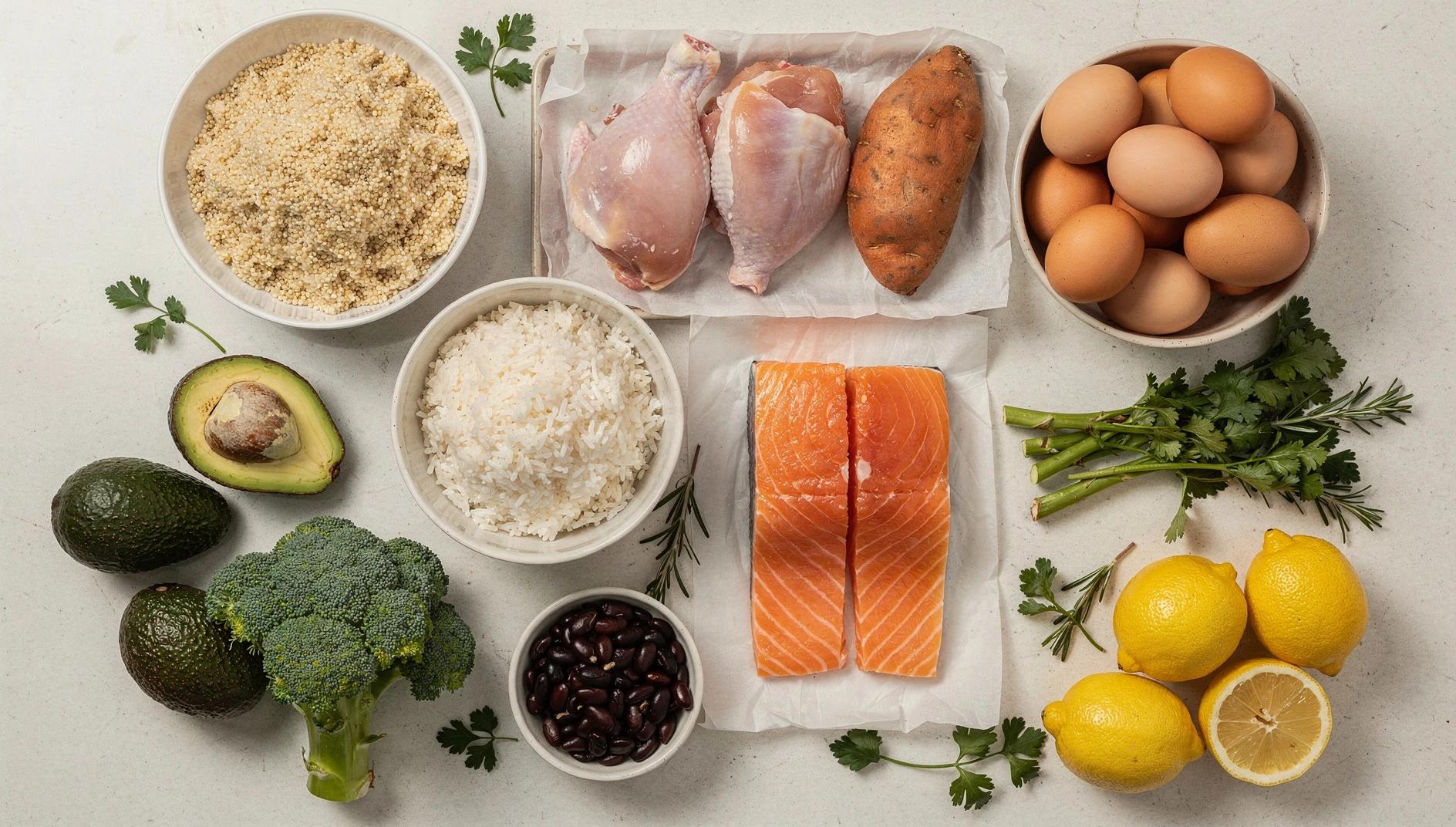
A gluten-free meal plan is easiest when it's built on foods that are naturally gluten-free (meat, fish, beans, vegetables, fruit, dairy, rice, potatoes, corn and quinoa) rather than on gluten-free replacements of bread and pasta. This 7-day plan does exactly that: breakfast, lunch, dinner and a snack for each day, ingredients reused across the week, one grocery list, and a Sunday prep that covers the first three days of lunches.
This is general information, not medical advice. If you have coeliac disease, a wheat allergy or another medical reason to avoid gluten, follow the advice of your doctor or a registered dietitian. Always check labels: brands change their recipes, and the same product can be gluten-free from one brand and not another.
What counts as gluten-free?
Gluten is a protein found in some grains. According to the Celiac Disease Foundation, the gluten-containing grains and their derivatives are wheat, rye, barley, triticale, malt and wheat starch. Many other everyday foods are gluten-free by nature.
| Naturally gluten-free | Contains gluten | Check the label |
|---|---|---|
| Fruit and vegetables (fresh and frozen) | Wheat, including wheat starch | Oats: buy oats labeled gluten-free |
| Meat, poultry, fish and seafood | Barley | Soy sauce (tamari made without wheat is gluten-free) |
| Dairy | Rye | Stock, gravy, sauces and marinades |
| Beans, legumes and nuts | Triticale | Sausages, burgers and processed meats |
| Rice, quinoa, corn, potato, buckwheat, millet, sorghum, teff, amaranth, cassava, tapioca | Malt (malt vinegar, malt extract, malt syrup, malt flavoring, malted milk) | Processed or seasoned vegetables, fries and dried fruit |
| Soy and plain tofu | Seitan and products made with it (some vegetarian burgers and sausages) | Spice blends, seasonings and ready meals |
The first two columns come from the Celiac Disease Foundation's lists of gluten-free foods and sources of gluten. Its advice for anything else is simple: read the ingredient list, and if you can't check the ingredients, don't eat it.
What a "gluten-free" label means in the US: the FDA's rule means that "any unavoidable gluten present in a food labeled 'gluten-free' is less than 20 ppm" (FDA). A product that isn't labeled gluten-free may still contain gluten or have been made alongside it, so the label matters most for packaged foods.
The 7-day gluten-free meal plan at a glance
| Day | Breakfast | Lunch | Dinner | Snack |
|---|---|---|---|---|
| Sunday | Veggie omelette with roast potatoes | Rice cakes with hummus and cucumber | Roast chicken thighs, sweet potatoes and broccoli | Apple and cheese |
| Monday | Gluten-free overnight oats with berries | Chicken, quinoa and roast veg salad | Chicken and black bean tacos on corn tortillas | Greek yogurt and honey |
| Tuesday | Eggs and spinach with roast potatoes | Chicken, quinoa and roast veg salad | Baked salmon, quinoa and green beans | Handful of nuts |
| Wednesday | Gluten-free overnight oats with berries | Salmon and quinoa bowl | Beef and vegetable stir-fry with rice and tamari | Banana and peanut butter |
| Thursday | Greek yogurt, fruit and nuts | Stir-fry leftovers | Sweet potato and black bean chili | Popcorn |
| Friday | Gluten-free overnight oats with berries | Chili with rice | Chili-topped baked potatoes | Hummus and carrot sticks |
| Saturday | Scrambled eggs with tomatoes and avocado | Leftover chili or a big salad with tuna | Burgers in lettuce wraps with potato wedges | Fruit |
Five dinners are cooked from scratch and two lunches a week come straight from the night before.
Sunday prep (about an hour)
- Roast 2 lb (900 g) chicken thighs with the sweet potatoes. Eat half tonight and keep half for Monday's tacos and the lunch salads.
- Cook 1 cup (170 g) quinoa for Monday's and Tuesday's lunches and Tuesday's dinner.
- Roast a tray of vegetables (peppers, zucchini and red onion) for the quinoa salads.
- Mix three jars of overnight oats with gluten-free labeled oats, milk or yogurt, and berries.
- Roast a tray of cubed potatoes for Sunday's and Tuesday's breakfasts.
- Wash and cut vegetable snacks (cucumber, carrots, peppers) and store them in water in the fridge.
The USDA says cooked leftovers keep in the fridge for 3 to 4 days or frozen for 3 to 4 months, so Sunday's prep covers lunches through Tuesday.
The dinners
Sunday: Roast chicken thighs, sweet potatoes and broccoli
Toss 2 lb (900 g) chicken thighs and 2 large cubed sweet potatoes with olive oil, salt, pepper and smoked paprika. Roast at 425°F (220°C) for 35–40 minutes, until the chicken reaches 165°F (74°C), the USDA's safe temperature for poultry. Add broccoli for the last 12 minutes. Keep half the chicken.
Monday: Chicken and black bean tacos
Warm the shredded leftover chicken with a can of drained black beans, cumin and a squeeze of lime. Serve in corn tortillas labeled gluten-free, with salsa, avocado and lettuce. Corn is naturally gluten-free, but tortillas can be made with wheat flour or on shared lines, so check the pack.
Tuesday: Baked salmon, quinoa and green beans
Bake 2 salmon fillets at 400°F (200°C) for 12–15 minutes, until they reach 145°F (63°C). Serve with quinoa from Sunday and steamed green beans. Cook an extra fillet if you want salmon in Wednesday's lunch bowl.
Wednesday: Beef and vegetable stir-fry with rice and tamari
Stir-fry 12 oz (340 g) thinly sliced beef with peppers, broccoli and snap peas. Season with tamari made without wheat (soy sauce is a common source of gluten), garlic, ginger and a little honey. Serve with rice, and make enough for Thursday's lunch.
Thursday: Sweet potato and black bean chili
Soften an onion, garlic and a pepper, then add 1 lb (450 g) ground beef or turkey and cook it through (160°F / 71°C for ground beef, 165°F / 74°C for ground turkey). Add cubed sweet potato, 2 cans black beans, a can of crushed tomatoes, chili powder and cumin, and a cup of gluten-free stock. Simmer for 30 minutes. This makes enough for Friday's lunch and dinner. Check the chili powder and stock: some blends and stock cubes contain wheat.
Friday: Chili-topped baked potatoes
Bake 2 large potatoes (about an hour at 400°F / 200°C, or 8–10 minutes in the microwave), then top with reheated chili, cheese and sour cream or plain yogurt.
Saturday: Burgers in lettuce wraps with potato wedges
Shape plain ground beef into patties, season with salt and pepper, and cook to 160°F (71°C). Serve in large lettuce leaves with tomato, pickles and mustard, alongside oven-baked potato wedges. Shop-bought burgers and some condiments can contain wheat or barley malt, so making your own patties is the simplest way to be sure.
Gluten-free grocery list (for 2)
| Aisle | Items |
|---|---|
| Produce | 2 large sweet potatoes · 2 lb (900 g) potatoes plus 2 baking potatoes · 2 heads broccoli · 3 peppers · 1 zucchini · 2 onions · 1 red onion · garlic · ginger · spinach · lettuce (for wraps and salads) · 2 tomatoes · 2 avocados · cucumber · carrots · snap peas · green beans · limes · berries · apples · bananas |
| Meat and fish | 2 lb (900 g) chicken thighs · 2–3 salmon fillets · 12 oz (340 g) beef for stir-fry · 1 lb (450 g) ground beef or turkey for chili · 12 oz (340 g) ground beef for burgers |
| Dairy and eggs | 1 dozen eggs · Greek yogurt · milk · cheese · sour cream or plain yogurt |
| Pantry | Rice · quinoa · oats labeled gluten-free · 3 cans black beans · 1 can crushed tomatoes · gluten-free stock · tamari made without wheat · salsa · hummus · nuts · peanut butter · honey · popcorn kernels · olive oil · chili powder, cumin, smoked paprika (check blends) |
| Bakery and frozen | Corn tortillas labeled gluten-free · rice cakes labeled gluten-free · frozen berries (optional) |
The Celiac Disease Foundation advises against buying grains from bulk bins "because of the possibility of cross-contact with gluten", so buy rice, quinoa and oats in sealed packs.
Avoiding cross-contact in a shared kitchen
If only one person in the house eats gluten-free, small habits make a big difference:
- Cook the gluten-free food first, before anything with flour, breadcrumbs or regular pasta.
- Keep a separate toaster (or toaster bags) and a separate colander. Crumbs and pasta starch are hard to clean out.
- Use separate spreads. A knife that has touched regular bread puts crumbs into the butter, jam or peanut butter jar.
- Wipe surfaces and boards before preparing gluten-free food, and wash pans thoroughly.
- Label the gluten-free shelf in the cupboard and freezer so nobody swaps products by mistake.
- Be careful eating out. The Celiac Disease Foundation notes that pizzerias offering gluten-free crusts "sometimes do not control for cross-contact with their wheat-based doughs". Ask how food is prepared.
Keep a gluten-free diet affordable
- Build meals on naturally gluten-free basics. Rice, potatoes, beans, eggs, corn tortillas and seasonal vegetables cost far less than specialty gluten-free breads and baked goods.
- Buy specialty products only where you need them, such as gluten-free oats or tortillas, and use rice, potatoes and quinoa for the rest.
- Cook once, eat twice. This plan reuses Sunday's chicken and quinoa and Thursday's chili, so you cook five dinners, not seven.
- Freeze extras. Chili and cooked chicken both freeze well for a later week.
More budget ideas are in our cheap meal prep guide and our pantry staples list. Cooking for the whole family? Our weekly family meal plan has swaps for gluten-free households, and our high-protein meal prep recipes are mostly built on rice, quinoa and potatoes.
Plan your gluten-free week in an app
Disclosure: FoodiePrep (foodieprep.ai) is our app.
In FoodiePrep's Recipe Preferences you can tick Gluten-Free as a Food Rule, and every recipe Chef Foodie creates or plans for you follows it. If gluten is a medical issue, record it under Allergies instead: gluten is one of the listed allergies, and the Gluten-Free food rule isn't offered separately once it's ticked, because the allergy covers it. You can also ask Chef Foodie to make an existing recipe gluten-free, plan a week "from my pantry", and turn the plan into one grocery list.
The app can't tell you whether a particular brand of stock, tortilla or soy sauce is gluten-free. It writes recipes without gluten-containing ingredients, but you still need to check the label of every packaged product you buy.
Frequently Asked Questions
What can I eat on a gluten-free meal plan?
You can eat fruit, vegetables, meat, poultry, fish, seafood, dairy, beans, legumes, nuts and naturally gluten-free grains like rice, quinoa, corn, potatoes and buckwheat. Oats are fine if they're labeled gluten-free. Check the label on anything packaged.
What foods contain hidden gluten?
Soy sauce, malt vinegar and malt flavoring, stock and gravy, sauces and marinades, sausages and processed meats, and some seasonings can all contain gluten. Products made with seitan (wheat gluten), such as some vegetarian burgers and sausages, contain gluten too.
Are oats gluten-free?
Only buy oats that are labeled gluten-free: the Celiac Disease Foundation lists "gluten-free oats" as a naturally gluten-free food and advises looking for oats specifically labeled gluten-free. If you have coeliac disease, ask your doctor or dietitian whether oats suit you.
What does "gluten-free" on a label mean?
In the US, a food labeled gluten-free must have less than 20 parts per million (ppm) of any unavoidable gluten, under the FDA's labeling rule. Products without the label may still be gluten-free, but you'll need to check the ingredients yourself.
How do I meal prep gluten-free?
Batch-cook naturally gluten-free basics on one day (roast chicken, quinoa, rice, roast vegetables and a big pot of chili) and combine them into different meals through the week. Our meal planning template has space to plan the week and the prep.
Should I go gluten-free if I don't have coeliac disease?
Talk to your doctor before cutting out gluten for health reasons, because the right approach depends on why you're doing it. If you do eat gluten-free, a plan built on naturally gluten-free whole foods, like this one, is simpler and cheaper than relying on gluten-free replacement products.
How do I avoid cross-contact at home?
Cook gluten-free food first, use a separate toaster and colander, keep separate spreads, and wipe surfaces and boards before you start. Label gluten-free products so nobody mixes them up.
Start your gluten-free week
Use this plan as-is for your first week, then swap in your own favourites. If you'd rather have a gluten-free week planned and the grocery list written for you, try FoodiePrep free on iPhone, Android or the web, and set Gluten-Free as a food rule.
Related reading
7-Day Anti-Inflammatory Meal Plan (With Grocery List) — 2026
A 7-day anti-inflammatory meal plan with breakfasts, lunches, dinners and snacks, a grocery list, a Sunday prep plan, and foods to eat and limit from Harvard Health.
Weekly Family Meal Plan: 7 Easy Dinners + Grocery List (2026)
A weekly family meal plan with 7 easy dinners for 2 adults and 2 kids, one grocery list, a 45-minute Sunday prep, and swaps for picky eaters and allergies.
7-Day 1800 Calorie Meal Plan (With Grocery List) — 2026
A complete 7-day 1800 calorie meal plan with per-meal calories and protein, a full grocery list, and how to generate a personalised calorie-target plan automatically.