
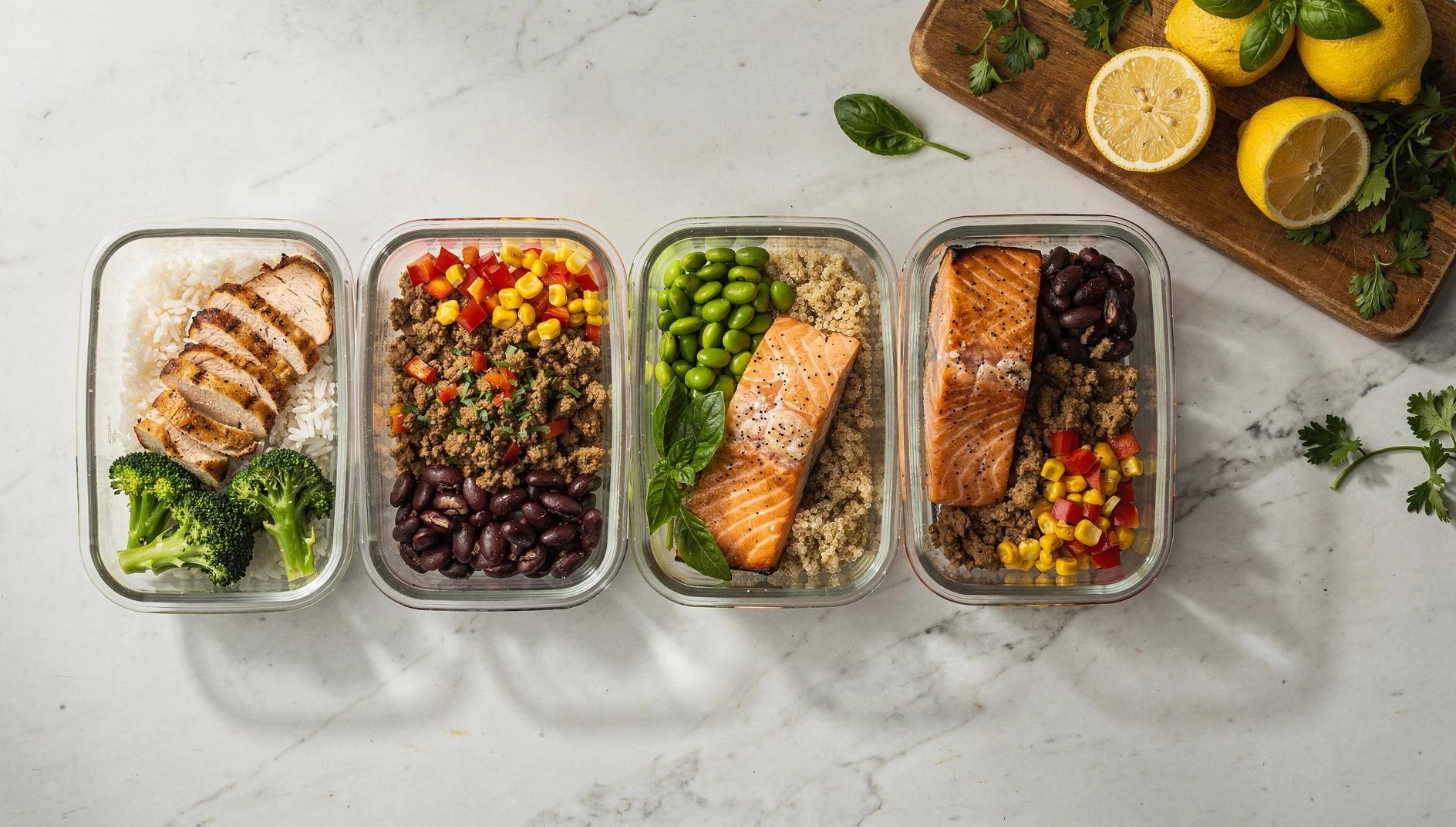
High-Protein Meal Prep: 10 Easy Recipes (25–50 g Protein Each)
Updated 6 November 2026 · Each recipe makes 4 portions
High-protein meal prep means cooking a batch of meals built around a lean protein (chicken, turkey, fish, eggs, Greek yogurt, beans or tofu) so every portion in the fridge already has 25–50 g of protein. Below are 10 easy recipes that keep well, the estimated protein in each portion, and a two-hour Sunday plan that turns four of them into a week of lunches and breakfasts.
Looking for a full day-by-day plan instead? See our 7-day high-protein meal plan for muscle gain or how to get 150 grams of protein a day.
The 10 recipes at a glance
| # | Recipe | Protein per portion (est.) | Best for | Freezes well? |
|---|---|---|---|---|
| 1 | Garlic chicken, rice and broccoli | ~50 g | Lunch | Yes (without the broccoli) |
| 2 | Turkey taco bowls | ~43 g | Lunch | Yes |
| 3 | Beef and lentil chili | ~44 g | Lunch or dinner | Yes |
| 4 | Salmon, quinoa and edamame bowls | ~42 g | Lunch | Eat within 3 days |
| 5 | Shrimp and vegetable stir-fry | ~40 g | Lunch or dinner | Best fresh |
| 6 | Chicken thigh and sweet potato traybake | ~41 g | Dinner | Yes |
| 7 | Tofu, edamame and quinoa bowls (vegan) | ~41 g | Lunch | Yes |
| 8 | Chickpea and lentil curry with yogurt (vegetarian) | ~35 g | Lunch or dinner | Yes (add yogurt after) |
| 9 | Egg and cottage cheese muffins | ~25 g | Breakfast | Yes |
| 10 | Protein overnight oats | ~25 g | Breakfast | No |
How we estimated the protein: each figure adds up the main ingredients at the cooked weight shown, using per-100 g values from USDA FoodData Central. Vegetables, sauces and oil aren't counted. Brands and cuts vary, so treat the numbers as a close guide, not a lab measurement.
1. Garlic chicken, rice and broccoli — the classic meal prep box
Protein: ~50 g per portion (150 g cooked chicken breast, 150 g cooked rice).
Makes 4: about 1¾ lb (800 g) raw chicken breast, 1 cup (200 g) uncooked rice, 2 heads of broccoli, garlic, olive oil, lemon, salt and pepper.
- Heat the oven to 425°F (220°C). Toss the chicken with oil, crushed garlic, salt and pepper.
- Roast for 20–25 minutes until it reaches 165°F (74°C), the USDA's safe minimum for poultry. Rest it for 5 minutes, then slice.
- Cook the rice. Roast or steam the broccoli for the last 10 minutes.
- Divide into 4 containers and finish with lemon juice.
Chicken breast dries out when reheated, so slice it thicker and add a spoon of sauce (salsa, pesto or a yogurt dressing) to each box.
2. Turkey taco bowls — a fast, budget-friendly lunch
Protein: ~43 g per portion (120 g cooked lean ground turkey, 80 g black beans, 120 g cooked rice).
Makes 4: about 1½ lb (680 g) 93% lean ground turkey, 1 can black beans, ¾ cup (150 g) uncooked rice, 1 onion, 1 pepper, taco seasoning, salsa, frozen corn.
- Brown the turkey with the onion and pepper until it reaches 165°F (74°C) (ground poultry).
- Stir in the taco seasoning, drained beans and corn, and heat through.
- Divide over rice and keep salsa, lettuce or avocado in a separate pot until you eat it.
3. Beef and lentil chili — the best freezer meal prep
Protein: ~44 g per portion (100 g cooked lean beef, 100 g kidney beans, 75 g cooked lentils).
Makes 4: about 1¼ lb (560 g) 93% lean ground beef, 1 can kidney beans, ⅓ cup (65 g) dried red lentils, 1 can crushed tomatoes, 1 onion, garlic, chili powder, cumin.
- Brown the beef with the onion and garlic until it reaches 160°F (71°C).
- Add the spices, tomatoes, beans, lentils and 1 cup (240 ml) water.
- Simmer for 30 minutes, until the lentils are soft and the chili is thick.
Lentils add protein and fibre and stretch the beef, so the batch costs less. Freeze two portions for the end of the week.
4. Salmon, quinoa and edamame bowls — high protein with omega-3s
Protein: ~42 g per portion (120 g cooked salmon, 150 g cooked quinoa, 75 g edamame).
Makes 4: 4 salmon fillets (about 1¼ lb / 600 g raw), 1 cup (170 g) uncooked quinoa, 2 cups (300 g) frozen shelled edamame, cucumber, soy sauce, sesame seeds.
- Bake the salmon at 400°F (200°C) for 12–15 minutes until it reaches 145°F (63°C).
- Cook the quinoa and the edamame.
- Build the bowls with sliced cucumber and a soy and sesame dressing on the side.
Fish is best eaten within the first three days of your prep week, so plan these for Monday to Wednesday. Oily fish twice a week is also the backbone of our anti-inflammatory meal plan.
5. Shrimp and vegetable stir-fry — ready in 20 minutes
Protein: ~40 g per portion (150 g cooked shrimp, 150 g cooked rice).
Makes 4: about 1¾ lb (800 g) raw peeled shrimp, 1 cup (200 g) uncooked rice, 2 bags stir-fry vegetables, garlic, ginger, soy sauce.
- Stir-fry the vegetables with garlic and ginger for 3–4 minutes.
- Add the shrimp and cook for 2–3 minutes until pink and opaque all the way through.
- Add the soy sauce and serve over rice.
Shrimp overcooks easily when reheated, so warm it gently in short bursts.
6. Chicken thigh and sweet potato traybake — one pan, juicy reheats
Protein: ~41 g per portion (150 g cooked chicken thigh meat, 200 g sweet potato).
Makes 4: about 1¾ lb (800 g) boneless skinless chicken thighs, 2 lb (900 g) sweet potatoes, 1 red onion, smoked paprika, olive oil.
- Heat the oven to 425°F (220°C). Cut the sweet potatoes into cubes and the onion into wedges.
- Toss everything with oil, paprika and salt on one large tray.
- Roast for 30–35 minutes until the chicken reaches 165°F (74°C).
Thighs stay juicier than breast after reheating, which makes this a reliable choice for day-four lunches.
7. Tofu, edamame and quinoa bowls — the vegan high-protein option
Protein: ~41 g per portion (150 g firm tofu, 75 g edamame, 150 g cooked quinoa).
Makes 4: 600 g (about 1½ blocks) firm tofu, 1 cup (170 g) uncooked quinoa, 2 cups (300 g) frozen shelled edamame, soy sauce, maple syrup, garlic, a little cornstarch.
- Press the tofu for 15 minutes, cut it into cubes and toss with cornstarch.
- Bake at 425°F (220°C) for 25 minutes, turning halfway, until crisp.
- Toss with soy sauce, garlic and maple syrup, and divide over quinoa and edamame.
8. Chickpea and lentil curry with yogurt — vegetarian and freezer-friendly
Protein: ~35 g per portion (120 g chickpeas, 120 g cooked lentils, 150 g cooked rice, 100 g Greek yogurt).
Makes 4: 2 cans chickpeas, ½ cup (100 g) dried red lentils, 1 can coconut milk or crushed tomatoes, 1 onion, garlic, ginger, curry powder, 1¾ cups (400 g) nonfat Greek yogurt, rice.
- Soften the onion, garlic and ginger, then stir in the curry powder.
- Add the chickpeas, lentils, coconut milk or tomatoes and 1 cup (240 ml) water.
- Simmer for 20–25 minutes until the lentils are soft.
- Portion with rice. Add a spoon of Greek yogurt when you serve it, not before freezing.
Leave out the yogurt to make it vegan; it drops to about 25 g of protein per portion.
9. Egg and cottage cheese muffins — grab-and-go breakfast
Protein: ~25 g per portion (3 eggs and 60 g cottage cheese per portion, as 3 muffins).
Makes 12 muffins (4 portions): 12 eggs, 1 cup (240 g) 2% cottage cheese, spinach, chopped peppers, a little shredded cheese.
- Heat the oven to 350°F (180°C) and grease a 12-cup muffin tin.
- Whisk the eggs and cottage cheese, then stir in the vegetables.
- Fill the cups and bake for 20–25 minutes until set in the middle.
- Cool completely before refrigerating. Reheat for 30–45 seconds.
10. Protein overnight oats — no cooking at all
Protein: ~25 g per portion (50 g oats, 150 g nonfat Greek yogurt, ½ cup / 120 ml 2% milk).
Makes 4: 2 cups (200 g) rolled oats, 2½ cups (600 g) nonfat Greek yogurt, 2 cups (480 ml) milk, berries, a little honey or maple syrup.
- Mix the oats, yogurt and milk and divide between 4 jars.
- Top with berries and refrigerate overnight.
- Eat cold, or warm for a minute in the microwave.
A two-hour Sunday high-protein prep plan
This plan makes five lunches and four breakfasts from recipes 1, 3, 9 and 10.
- 0:00 Heat the oven. Put the rice on and start the chili (recipe 3) on the hob.
- 0:15 Season the chicken (recipe 1) and roast it. Mix the egg muffins (recipe 9) and bake them on the shelf below.
- 0:40 Take out the muffins to cool. Add the broccoli to the oven for the last 10 minutes of the chicken.
- 1:00 Rest and slice the chicken. Mix the overnight oats (recipe 10) into jars.
- 1:20 Portion the chicken boxes and the chili. Label the two chili portions for the freezer with today's date.
- 1:40 Wash up while everything cools, then refrigerate.
The USDA says cooked leftovers keep in the fridge for 3 to 4 days or frozen for 3 to 4 months. Eat the fridge portions from Monday to Wednesday and move the frozen chili to the fridge on Wednesday night for Thursday and Friday. Our guide to meal prepping for the week in under 2 hours has more on timing a prep session.
Tips for high-protein meal prep that stays good all week
- Pick one protein you cook in bulk. Roast a big tray of chicken thighs or brown a batch of lean ground turkey, then use it in two different recipes so you don't eat the same box five days running.
- Keep sauces separate. Dressings and salsas in small pots stop rice and grains going soggy.
- Cool food quickly. Spread hot food in shallow containers and refrigerate it within 2 hours of cooking.
- Add cheap protein boosters. Greek yogurt, cottage cheese, eggs, lentils and canned beans add protein for little money. More ideas are in our cheap meal prep guide.
- Use glass containers for reheating. They don't stain and they go straight into the microwave.
- Plan the week first. Decide which days get which box before you shop. Our free meal planning template has a prep-ahead section for exactly this.
Plan high-protein meal prep around a protein target
Disclosure: FoodiePrep (foodieprep.ai) is our app.
If you're aiming for a daily protein number, you can ask Chef Foodie, the AI assistant in FoodiePrep, for a plan around it, for example: "Plan 5 high-protein lunches and breakfasts for this week, 140 g protein a day, batch cook on Sunday." The targets are split across your meals and shown at the top of the plan, and the recipes are portioned to hit them when the plan is created. "Batch cook" spreads one meal across later days, and the grocery list is built from the whole plan.
Each recipe's nutrition is calculated automatically from its ingredients, amounts and servings. Calories and full macros in the planner need a nutrition-enabled plan (Nutrition Pro shows the macros). FoodiePrep plans meals to a target; it isn't a food diary or daily tracker.
Frequently Asked Questions
What is high-protein meal prep?
High-protein meal prep is cooking several portions of protein-rich meals in advance, usually on one day, so you have balanced meals ready for the week. Most recipes pair a lean protein with a carbohydrate and vegetables.
How much protein should a meal prep meal have?
Most high-protein meal prep recipes aim for about 25–50 g of protein per portion. How much you need each day depends on your body weight, activity and goals; a registered dietitian or your doctor can give you a personal number.
What are the best proteins for meal prep?
Chicken thighs, lean ground turkey or beef, salmon, eggs, Greek yogurt, cottage cheese, tofu, lentils and beans all reheat or keep well. Chicken thighs stay juicier than breast after reheating, and beans and lentils are the cheapest options.
How long does high-protein meal prep last in the fridge?
The USDA says cooked leftovers keep 3 to 4 days in the fridge or 3 to 4 months in the freezer. Cook for three or four days at a time, and freeze the rest of the week's portions.
What is a cheap high-protein meal prep?
Recipes built on eggs, canned beans, lentils, chicken thighs and lean ground turkey are the cheapest high-protein meal preps. The beef and lentil chili and the chickpea and lentil curry above both stretch a small amount of meat or skip it entirely.
Can I meal prep high-protein meals for weight loss?
Yes. High-protein meals are filling, and portioning them in advance makes it easier to stick to a plan. For a calorie-specific plan, see our meal prep for weight loss guide, and talk to a professional before making big changes to your diet.
What can vegetarians eat for high-protein meal prep?
Tofu, edamame, lentils, chickpeas, beans, eggs, Greek yogurt and cottage cheese. The tofu and quinoa bowls (about 41 g) and the chickpea and lentil curry (about 35 g with yogurt) are both vegetarian, and the tofu bowls are vegan.
Start your high-protein prep
Pick two lunches and one breakfast from the list, shop once, and follow the two-hour Sunday plan. If you'd rather have the week planned around your protein target and the grocery list written for you, try FoodiePrep free on iPhone, Android or the web.
Related reading
High-Protein Meal Plan for Muscle Growth: A Practical 7-Day Guide
A practical 7-day high-protein meal plan designed to support muscle growth, with evidence-based protein targets, balanced meals, and easy ways to stay consistent.
How to Get 150 Grams of Protein a Day: 7-Day Meal Plan (2026)
A 7-day meal plan that hits 150 grams of protein a day using four normal meals — with per-meal protein counts, a grocery list, and vegetarian swaps.
Cheap Meal Prep: How to Eat Well on a Budget (2026)
A practical guide to cheap meal prep: whether it actually saves money, the cheapest proteins and staples to build around, a 7-step budget method, easy cheap meal prep ideas, and sample weekly plans from $25.