
How to Get 150 Grams of Protein a Day: 7-Day Meal Plan (2026)
Updated August 2026
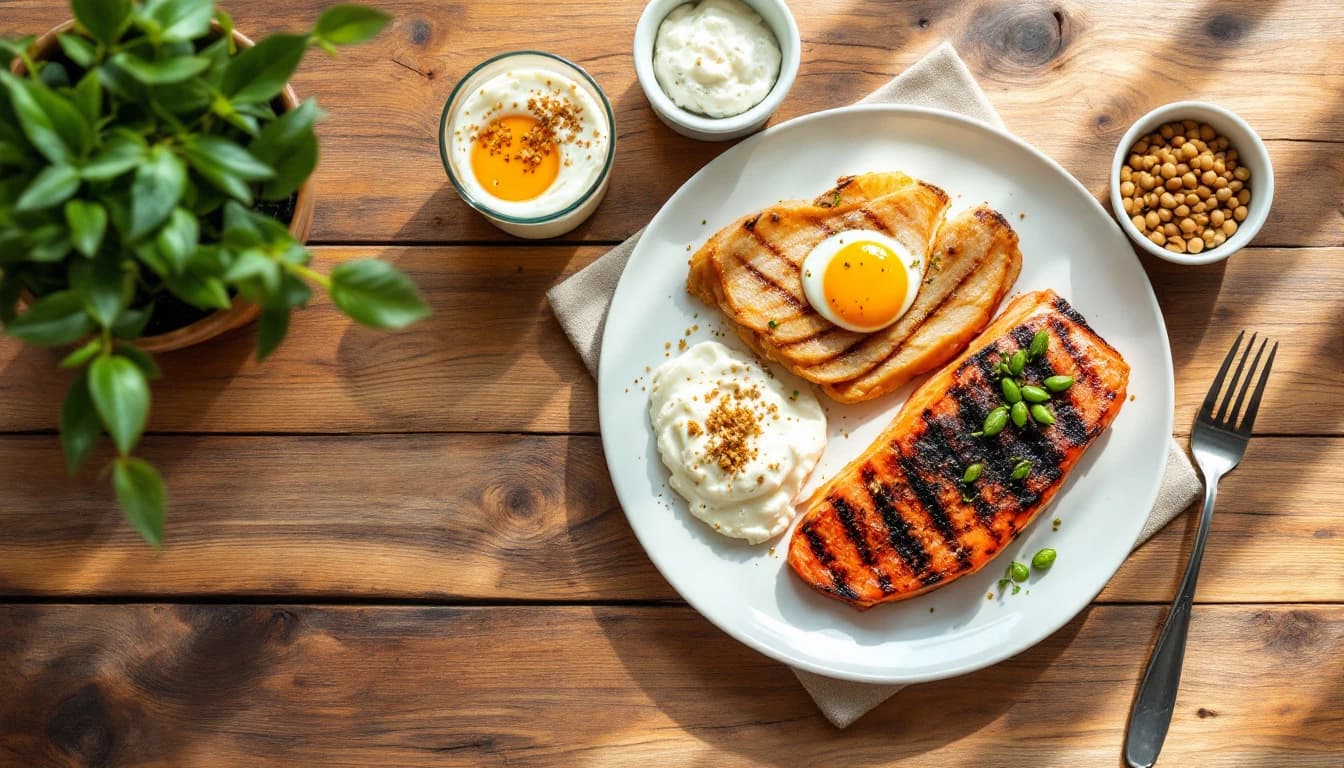
Getting 150 grams of protein a day comes down to one habit: 30–50 grams of protein at every meal, four times a day. No single chicken-breast mountain, no choking down shakes all day — just four normal meals, each built around a serious protein source. This guide gives you a 7-day meal plan that hits ~150g daily, the per-meal strategy behind it, and a grocery list to match.
General guidance only: protein needs are personal — they scale with body weight, training, and goals, and some medical conditions change what's appropriate. If you're managing a health condition, check your target with a doctor or registered dietitian.
The Fastest Way to Hit 150g of Protein a Day
Split the target across four meals: roughly 35g at breakfast, 40g at lunch, 25g from a snack, and 50g at dinner. Hitting 150g in two meals is miserable; hitting it in four is barely noticeable. Every day in the plan below follows that shape, landing between 145–155g of protein at roughly 2,000–2,200 calories — adjust portion sizes up or down to match your own calorie target.
The 7-Day 150g Protein Meal Plan at a Glance
| Day | Breakfast (~35g) | Lunch (~40g) | Snack (~20–25g) | Dinner (~50g) |
|---|---|---|---|---|
| 1 | Greek yogurt protein bowl | Chicken quinoa bowl | Cottage cheese + berries | Steak with potatoes & greens |
| 2 | Three-egg omelette + cottage cheese toast | Tuna pasta salad | Protein shake | Chicken thighs with rice & broccoli |
| 3 | Protein overnight oats | Turkey wrap + edamame | Greek yogurt + almonds | Salmon with lentils & spinach |
| 4 | Cottage cheese pancakes | Chicken Caesar salad | Beef jerky + apple | Prawn stir-fry noodles |
| 5 | Skyr bowl with seeds | Beef & bean chili bowl | Protein shake | Baked fish, potatoes & peas |
| 6 | Eggs & smoked salmon bagel | Chicken chickpea bowl | High-protein yogurt | Pork tenderloin with quinoa |
| 7 | Protein smoothie bowl | Chicken noodle soup + cottage cheese toast | Edamame | Turkey meatballs with pasta |
How this plan was built: the FoodiePrep team assembled it around whole-food protein sources, with powder appearing only where it's genuinely convenient. Protein and calorie figures are estimates — exact numbers depend on portions and brands. FoodiePrep (foodieprep.ai) can generate a plan like this automatically: give it a protein target and it builds the week, portioning each recipe to hit your numbers. To pick the right calorie envelope for your protein goal, start with our free calorie calculator, then let the AI meal planner build the week around it.
Day 1 — approx. 150g protein
- Breakfast: Greek yogurt protein bowl (40g protein, ~420 kcal) — Thick Greek yogurt with a half-scoop of protein powder stirred through, berries, and granola.
- Lunch: Chicken quinoa bowl (40g protein, ~550 kcal) — Grilled chicken breast over quinoa with roasted vegetables and tahini dressing.
- Snack: Cottage cheese with berries (20g protein, ~200 kcal) — The most underrated protein snack in the supermarket.
- Dinner: Steak with potatoes and greens (50g protein, ~700 kcal) — Sirloin with baby potatoes and buttered green beans.
Day 2 — approx. 150g protein
- Breakfast: Three-egg omelette with cottage cheese toast (35g protein, ~450 kcal) — Omelette with spinach; toast spread with cottage cheese instead of butter.
- Lunch: Tuna pasta salad (40g protein, ~550 kcal) — Two tins of tuna through cold pasta with sweetcorn, red onion, and a yogurt-mayo dressing.
- Snack: Protein shake (25g protein, ~180 kcal) — One scoop with milk or water.
- Dinner: Chicken thighs with rice and broccoli (50g protein, ~680 kcal) — Roasted thighs over rice with plenty of broccoli.
Day 3 — approx. 150g protein
- Breakfast: Protein overnight oats (35g protein, ~450 kcal) — Oats, milk, chia, and a scoop of protein powder, soaked overnight.
- Lunch: Turkey wrap with edamame (40g protein, ~520 kcal) — Generous sliced turkey in a wholemeal wrap, with a side of salted edamame.
- Snack: Greek yogurt with almonds (20g protein, ~250 kcal) — Plain yogurt, small handful of almonds.
- Dinner: Salmon with lentils and spinach (55g protein, ~650 kcal) — A large salmon fillet over herbed lentils with wilted spinach.
Day 4 — approx. 150g protein
- Breakfast: Cottage cheese pancakes (35g protein, ~450 kcal) — Blended cottage cheese, eggs, and oats make high-protein pancakes that don't taste like a compromise; top with berries.
- Lunch: Chicken Caesar salad (45g protein, ~550 kcal) — Double chicken, romaine, parmesan, and a restrained hand with the dressing.
- Snack: Beef jerky and an apple (20g protein, ~200 kcal) — Portable and fridge-free.
- Dinner: Prawn stir-fry noodles (45g protein, ~650 kcal) — A big portion of prawns with egg noodles and crisp vegetables in garlic-soy.
Day 5 — approx. 150g protein
- Breakfast: Skyr bowl with seeds (35g protein, ~400 kcal) — Icelandic skyr (higher protein than most yogurts) with pumpkin seeds and fruit.
- Lunch: Beef and bean chili bowl (45g protein, ~600 kcal) — Lean beef and kidney beans over a modest portion of rice; beans add protein and fibre.
- Snack: Protein shake (25g protein, ~180 kcal) — Easy calories-light protein between meals.
- Dinner: Baked fish with potatoes and peas (45g protein, ~620 kcal) — Two white-fish fillets, boiled potatoes, and minted peas.
Day 6 — approx. 150g protein
- Breakfast: Eggs and smoked salmon bagel (35g protein, ~500 kcal) — Scrambled eggs and smoked salmon on a toasted bagel.
- Lunch: Chicken chickpea bowl (40g protein, ~550 kcal) — Chicken and roasted chickpeas over couscous with cucumber and a lemon-yogurt dressing.
- Snack: High-protein yogurt (25g protein, ~150 kcal) — Any of the 20g+ single-pot yogurts works.
- Dinner: Pork tenderloin with quinoa and vegetables (50g protein, ~650 kcal) — Lean roast pork with quinoa and charred vegetables.
Day 7 — approx. 150g protein
- Breakfast: Protein smoothie bowl (40g protein, ~450 kcal) — Protein powder, frozen berries, banana, and milk, topped with granola.
- Lunch: Chicken noodle soup with cottage cheese toast (40g protein, ~500 kcal) — A chicken-heavy bowl of soup plus the Day 2 toast trick.
- Snack: Edamame (18g protein, ~160 kcal) — A bowl of salted pods.
- Dinner: Turkey meatballs with pasta (50g protein, ~700 kcal) — Lean turkey meatballs in tomato sauce over spaghetti.
Your 150g Protein Grocery List
Protein: chicken breast and thighs, sirloin steak, lean beef mince, turkey slices and mince, pork tenderloin, salmon, white fish, prawns, smoked salmon, tuna, eggs, beef jerky, protein powder Dairy: Greek yogurt, skyr, high-protein yogurt pots, cottage cheese, milk, parmesan Produce: berries, bananas, apples, spinach, romaine, broccoli, green beans, peas, edamame, peppers, onions, cucumber, potatoes, lemons Pantry: quinoa, rice, couscous, pasta, egg noodles, rolled oats, chia seeds, granola, wholemeal wraps, bagels, lentils, chickpeas, kidney beans, sweetcorn, almonds, pumpkin seeds, tahini, soy sauce, olive oil
FoodiePrep builds this list from the plan automatically — aisle-sorted, with pantry items flagged — and in supported countries sends it to your supermarket's online cart. See our comparison of meal planning apps with built-in grocery lists.
Frequently Asked Questions
How do I get 150 grams of protein a day?
Eat 30–50g of protein at each of four meals — never try to hit 150g in one or two. Build every meal around a named protein source (meat, fish, eggs, dairy, legumes), use high-protein dairy as snacks, and treat protein powder as a convenience, not a requirement. The 7-day plan above shows exactly what that looks like.
Is 150 grams of protein a day too much?
For most healthy, training adults, 150g is a reasonable target — but it isn't universal. Common sports-nutrition guidance puts protein needs for active people well above the sedentary baseline, and 150g suits many people who lift regularly. If you have kidney disease or another relevant condition, set your target with a medical professional.
Do I need protein powder to reach 150g?
No — powder is a convenience, not a necessity. This plan uses it in only a handful of meals, and each could be replaced with food (an extra egg, more chicken, a higher-protein yogurt). Powder simply makes breakfasts and snacks faster.
Can I get 150g of protein as a vegetarian?
Yes, with deliberate choices: eggs, dairy, tofu, tempeh, seitan, lentils, and beans. Skyr, cottage cheese, and high-protein yogurts do heavy lifting; tofu and tempeh swap into the stir-fry and bowls; lentil and bean dishes replace the meat chilis. Expect to lean on dairy more than a meat-eater would.
What's the best app for a high-protein meal plan?
FoodiePrep generates protein-target meal plans and turns them into a grocery list automatically. Its agentic AI assistant, Chef Foodie, splits your protein and calorie targets across the week's meals, portions every recipe to hit them, schedules the meals on your planner, and adds what you're missing to an aisle-sorted shopping list. Free to start on iOS, Android, and the web.
How many calories is a 150g protein meal plan?
This plan runs roughly 2,000–2,200 calories, but 150g of protein fits almost any calorie target. Protein-dense foods are relatively low-calorie, so you can hold 150g while cutting on a 1500 calorie plan or maintaining on a 2000 calorie plan — the portions of carbs and fats are what flex.
The Bottom Line
150 grams of protein a day is a portioning problem, not a willpower problem: four meals, each anchored by a real protein source, adds up before you notice. If you're training for muscle, pair this eating pattern with our high-protein meal plan for muscle growth.
FoodiePrep builds protein-target meal plans, portions the recipes to your numbers, and writes the grocery list — free to start on iOS and Android.
Four meals. 150 grams. Planned once.
Related reading
High-Protein Meal Plan for Muscle Growth: A Practical 7-Day Guide
A practical 7-day high-protein meal plan designed to support muscle growth, with evidence-based protein targets, balanced meals, and easy ways to stay consistent.
7-Day 1800 Calorie Meal Plan (With Grocery List) — 2026
A complete 7-day 1800 calorie meal plan with per-meal calories and protein, a full grocery list, and how to generate a personalised calorie-target plan automatically.
7-Day 3000 Calorie Meal Plan (With Grocery List) — 2026
A complete 7-day 3000 calorie meal plan for muscle gain and high energy needs — per-meal calories and protein, a full grocery list, and how to generate a personalised version automatically.